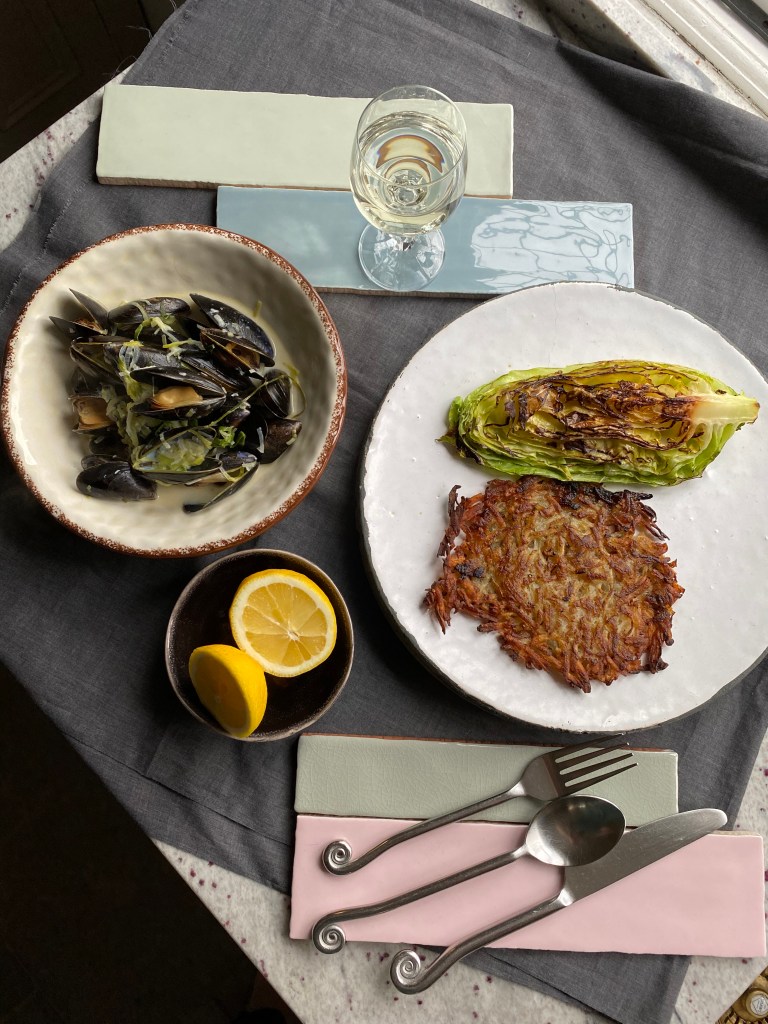
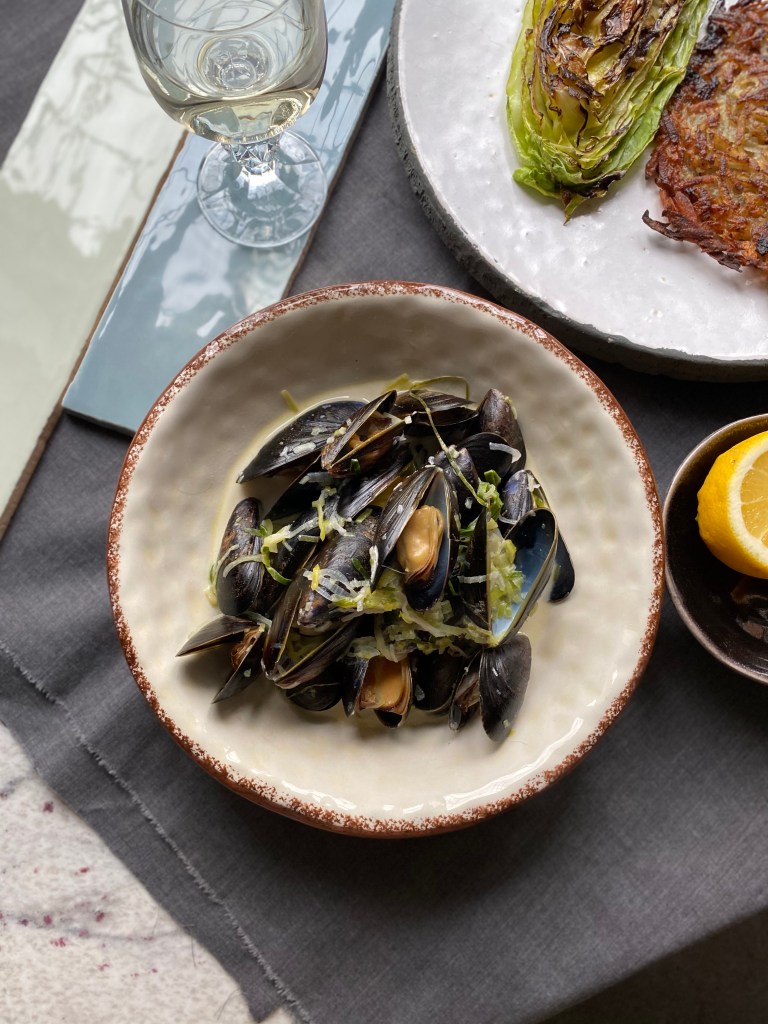
Steamed mussels, potato rosti and burnt Hispi cabbage quarters

  • 1 white onion peeled and finely sliced 
  • 3 large Maris Piper potatoes that have been peeled and grated on the course side of a box grater.
  • Pinch of sea salt 
  • Pinch of black pepper 
  • 15 grams of butter 
  1. To begin in a small saucepan add a glug of olive oil and once the oil is warm add your onions along with a pinch of sea salt. You want to cook these till they are soft and little golden.
  2. Once add this stage add your butter and allow to melt as this perfumes the butter but gives the onions another level of luxury. 
  3. Next once you have grated your potatoes squeeze out any excess moisture and liquid, mix these in a large bowl with your warmed onions. Add a pinch of black pepper and pinch of sea salt to finish. 
  4. To colour off your rosti place a large frying pan onto a medium heat, add a little oil once the oil is hot and smoking a little. Add your potato rosti mix to the pan ensure that the rost mix is one thin layer once the rosti is crisp and golden flip and repeat on the other side. 
  5. Add these to a lined baking sheet, and later cook in the oven at gas mark four for 20 minutes to ensure that the potato is cooked through.  

Burnt hispi Cabbage quarters:

  • 1 large washed Hispi cabbage
  • Pinch of Sea Salt 
  • Glug of olive oil
  1. To begin slice your cabbage into quarters, if there are any outer leaves reserve these for the mussels.
  2. Place a pan onto a high heat brush your cabbage with some olive oil and place two pieces into the pan, cook on both sides till golden brown and crisp to avoid oil going everywhere place a saucepan lid over the pan as this always helps to steam the cabbage and gently cook them as they grill. 
  3. Once your cabbage is perfectly crisp if they go a little dark don’t worry they taste beautiful a little burnt. 
  4. Place onto a lined baking tray and place into your pre-heated oven along with your potato Rosti and cook till warm through. You cabbage wont need cooking for long. 

Steamed Mussels:

  • 1 kg of fresh mussels that have been cleaned and de-bearded.
  • 1 large leek finely sliced.
  • 1 banana shallot
  • 2 garlic cloves peeled 
  • Glass of Ned white wine
  • Cabbage outer leaves washed and finely sliced 
  • 200 ml of cold water 
  • 100 ml of double cream or if for less calories single cream works great as well. 
  • Black pepper 
  • Glug of olive oil 
  1. To begin in a large saucepan, cook down your base of garlic, shallot, leek and cabbage leaf till soft a tender you can add a little salt but not much as mussels will release their beautiful saltiness once cooked. 
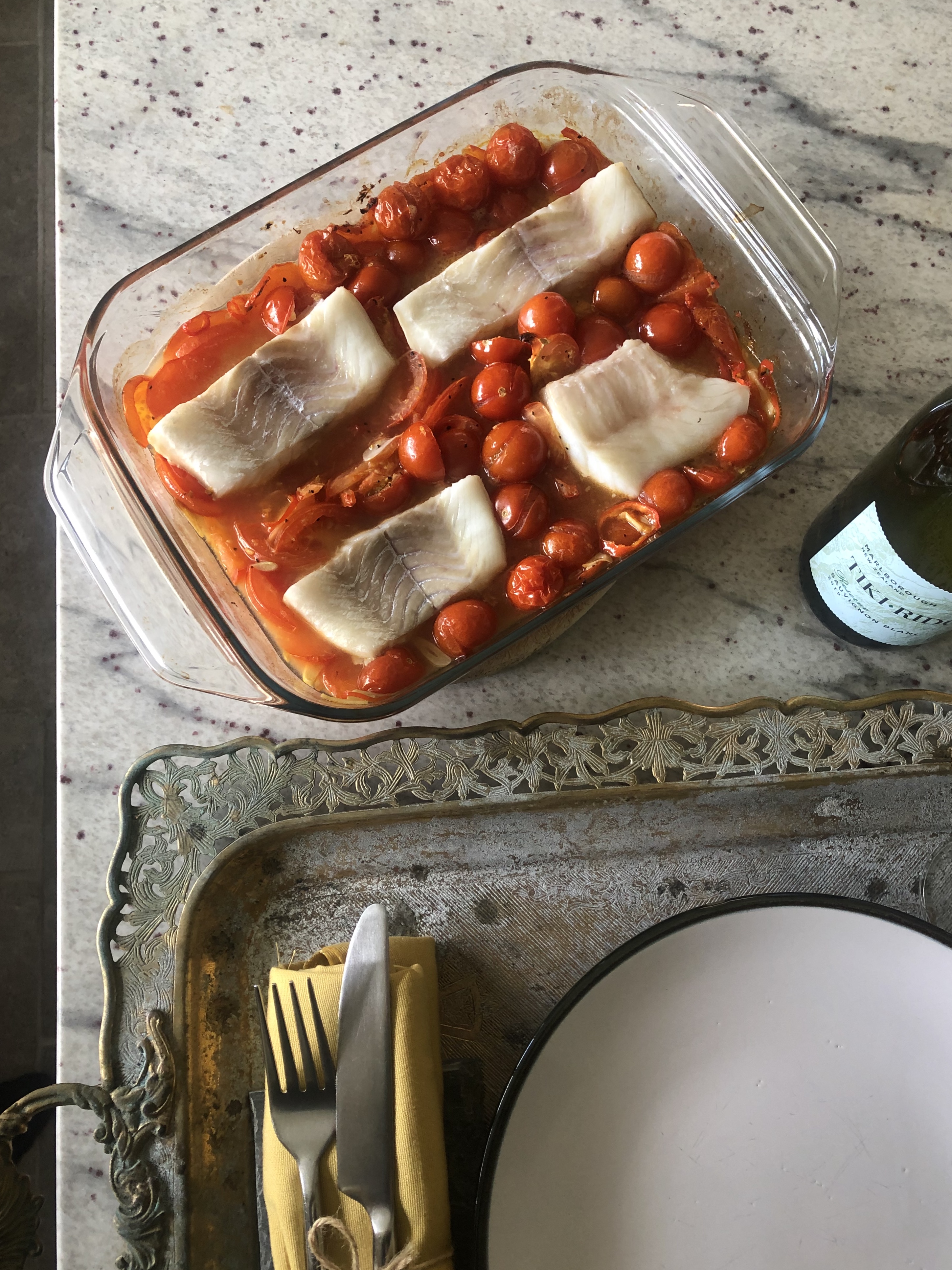
  2. To create a little steam once your base is cooked and tender, add your water along with your wine, bring the pan up to a high boil and then once at this stage add your mussels place on the lid and allow to steam just as they pop open this will only take a matter of minutes. 
  3. Once your mussels are open any that haven’t opened discard, remove the pan from the heat and add your double cream this works amazingly well with the leeks and gives the whole dish some body and comfort. 
  4. Serve into your chosen pre-heated bottles and serve alongside your cabbage and rosti.
  5. Serve with the wine which you cooked the mussels in, for this dish the featured wine is the Ned Sauvignon Blanc Newzland. 

Serve alongside with some fresh crusty Artisan Sourdough Bread and salted butter, this dish is a real celebration of gathering and good times which everyone is craving so badly at the current moment, or will make a beautiful meal for two.

The GG. 

See my dish on Neptune Weybridge’s feed here:

Beat the January blues with my Seville Orange & Artisan Honey Upside Down cake

My latest recipe for Neptune Weybridge to beat the January blues and put a smile on your face: Seville Orange & Artisan Honey Upside Down cake.
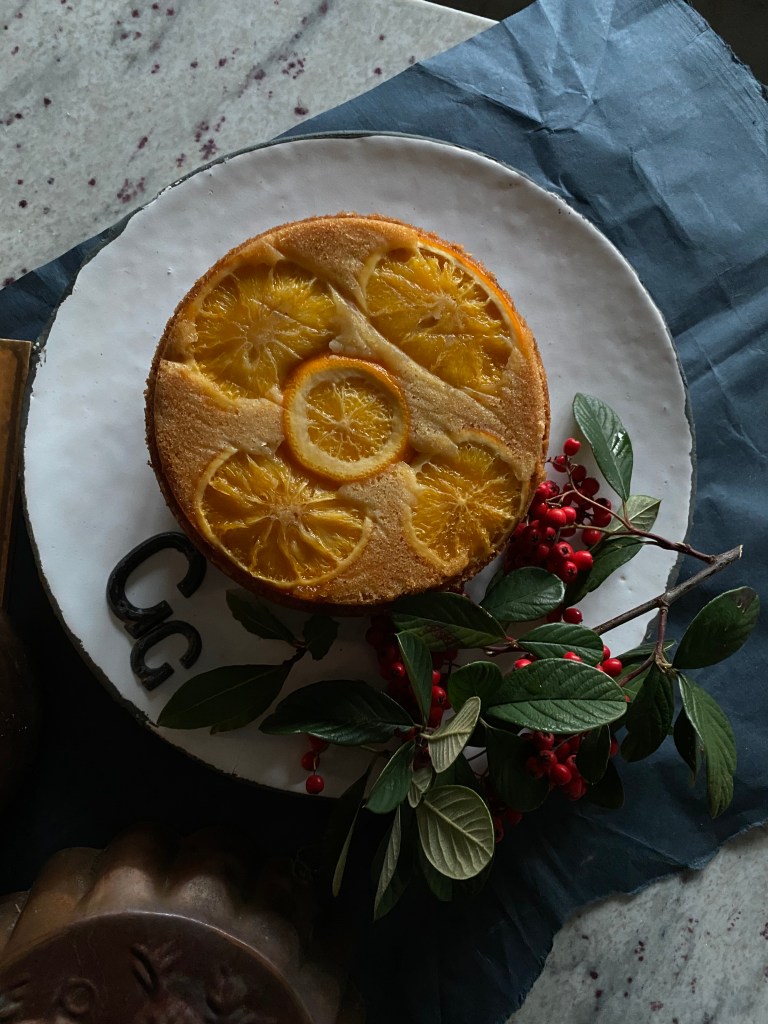
This delicious cake celebrates the Seville orange, which is in season right now, with their beautiful perfume and sweet citrus aroma. A great little pick me up, which is so very important at the moment. Take the time to bake this gem of a cake, get the whole household to join in, and enjoy as a well-deserved mid-week treat.
Perfect with a cup of Earl Grey or enjoy with a little drizzle of double cream or a traditional rich egg custard. 

  1. To begin pre-heat your oven to gas mark 6, for this cake you want to use a small 7 inch cake tin, ensure that the tin is perfectly buttered with a piece of baking parchment cut into a circle to be placed on the bottom for your orange slices. 
  2. Next choose two large juicy Seville oranges one for the juice and the other for slices. Using a sharp knife slice length ways into thin slices. With the orange cut into slices place into a small saucepan. Cover with the juice of the other Seville orange along with 2 tablespoons of golden caster sugar, place over a high heat, you want to poach the oranges in the sugar syrup until soft. 
  3. Once at this point, being careful remove your oranges from the sugar syrup and arrange them in the bottom of the cake tin. You want to place one in the middle then have 4 slices overlapping to form your pattern as this will be the top of the cake. 

Victoria Sponge batter:

• 6 oz of room temperature softened butter 
• 6 oz of golden caster sugar 
• 3 large free-range eggs 
• 6 oz of self-raising flour 
• The zest of one large orange

1. To begin cream together your softened butter and caster sugar till soft and fluffy.
2. Next add one at a time, one large free range egg ensure that the eggs are properly worked into the mixture before adding the next.
3. To stop your mixture from splitting, add a tablespoon of your flour in a figure of eight incorporate this into the batter.
4. Then add the rest of your flour, fold this into the mixture as you don’t want to knock out any air from your sponge. 
5. Spoon your cake batter on top of the orange slices and gently tap the cake mould to ensure that there isn’t any cake batter loose or air bubbles have formed. 
6. Place into your preheated oven and bake for 1 hr – 1:30 minutes, if the cake begins to colour on top then cover with a piece of tin foil. You want your sponge to be light and golden, to test whether your cake is ready using a cake sewer or knife place this into the centre of the cake and this should come out clean. 
7. Once cooked remove from the oven and allow to cool completely on a wire wrack in the cake tin, once cake is cool remove the tin and flip over onto you chosen Neptune plate. At this point drizzle over a little honey mead, this gives the cake a beautiful moist but sweet tone which complements the oranges perfectly, to reveal the beautiful Saville orange pattern. 

This cake is perfect with a cup of Earl Grey or enjoy with a little drizzle of double cream or a traditional rich egg custard.

The recipe is also on @neptuneweybridge Stories and Food & Drink Highlights.
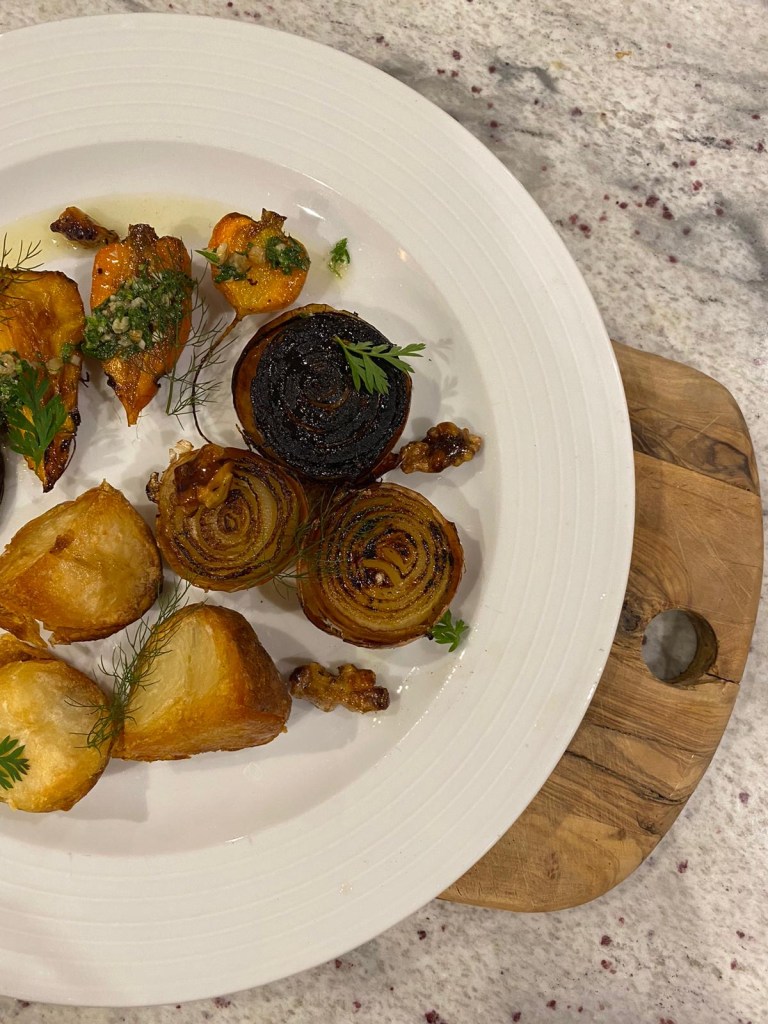
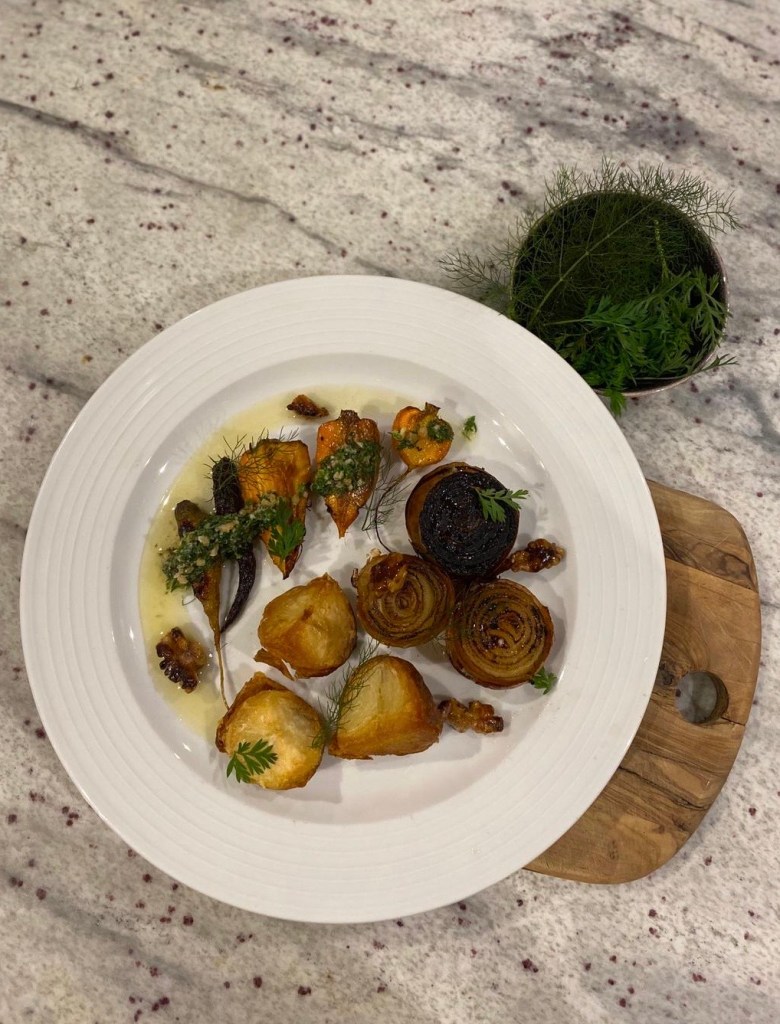
My latest dish for Neptune Weybridge – Roasted heritage carrots, burnt onion halves, carrot top pesto, roasted garlic and sage potatoes, topped with fennel tops and fresh carrot shoots

Roasted Garlic and Sage Potatoes:

  • To begin wash 1 kg of King Edward potatoes and cut them into equal sized pieces, fill with cold water and place onto a medium heat with a pinch of sea salt.
  • Once the water has come up to a boil reduce to a medium simmer and poach for around 30 minutes till they are part boiled and can be pierced with a paring knife. 
  • Drain and allow to steam, as this helps to form a fluffy and crunchy potato once roasted, additionally you can rough them up a little in the pan to create even more crispness. 
  • Next pre-heat your oven to 200 degrees (or gas mark 9) and place a roasting tray in to the warm oven, then add your olive oil, carefully add your potatoes and roast for 30 minutes
  • After this add your crushed garlic and sage and roast for an additional 15 minutes to get them really crunchy and crisp. 
  • Once cooked to perfection reserve to one side to keep warm till the plating begins. 

Burnt Onion Halves:

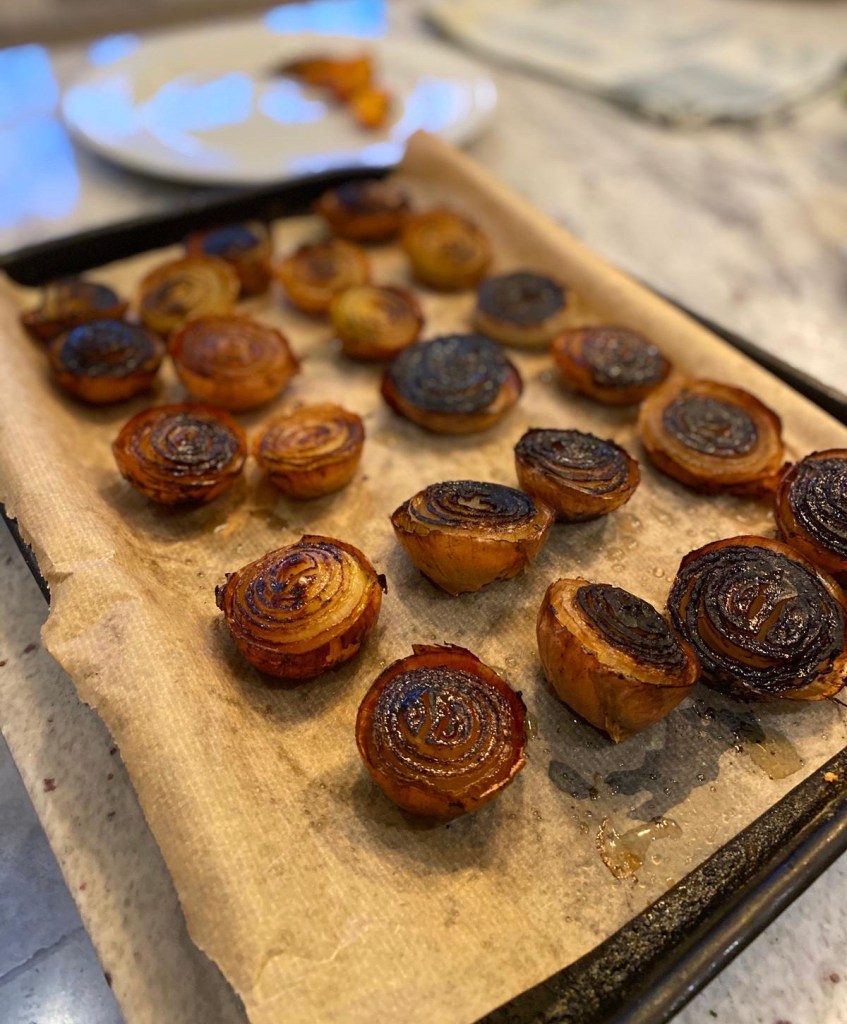
  • To begin slice your freshly pulled and drained onions in half, keeping the outer jacket intact.
  • Next place a large based frying pan onto a medium heat, once lightly smoking add a drizzle of olive oil and roast your onions till blackened and burnt as this helps to amplify their natural sugars that are found naturally in the onions.
  • Place them onto a baking tray which has been lined with baking paper and place into the oven to carry on the cooking. You want your onions to look like little roses.
  • Once soft, reserve in a warm place until required later on in the process. N.B. also try these for the best cheddar and onion sarnie. 

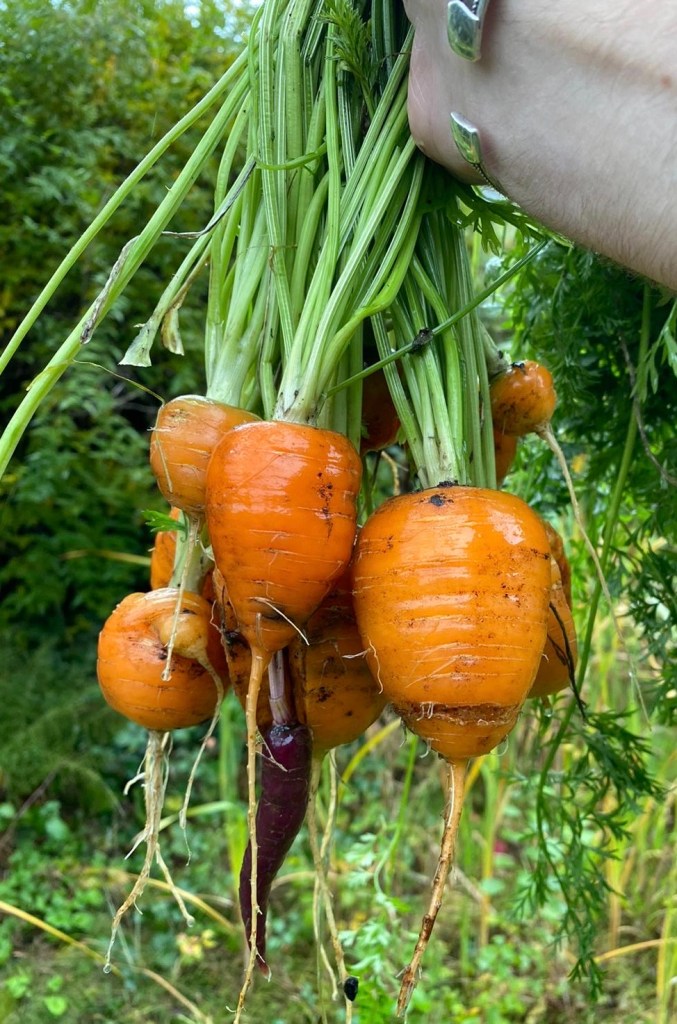
Roasted Heritage Carrots (freshly pulled from the garden):

  • Within 30 minutes of being pulled, I washed and trimmed the tops of the carrots.
  • Slice in half, lightly oil with good quality olive oil and season with a pinch of sea salt and black pepper.
  • Place into a roasting tray and roast at 200 degrees till lightly golden and a little caramelised, as these are so fresh you don’t want to over cook these carrots. 
  • Once roasted drizzle with an additional drop of olive oil and reserve to one side till required later on in the process. This dish is quite simple but highlights the beauty of the carrots and the fact that they are so fresh and different shaped. 

Carrot Top Pesto:

  • 200g of toasted walnuts
  • 4 garlic cloves (crushed, peeled and pureed)
  • Lemon Zest and the juice of the same lemon
  • 2 pinches of freshly grated nutmeg
  • 500 grams of freshly washed carrot tops
  • 150 grams of veggie parmesan cheese
  • Olive oil to loosen 
  • Sea salt and freshly ground black pepper (enough to season)
  • To begin, in a medium saucepan, lightly toast off your walnuts to release their natural oils and gently warm them through, tip out onto a chopping board and chop quite finely
  • Add to a glass bowl along with your pureed garlic cloves and a good pinch of seasoning, next add your nutmeg and olive oil. 
  • Now add your lemon juice and zest to lift the pesto, then add your washed and chiffonade carrot tops, they have a light celery note which is beautifully subtle and of course you are using part of the carrot which is often overlooked.
  • To finish add your parmesan cheese and taste, the pesto should be quite thick with a oily shine. Since you want to use this as a dressing for your freshly roasted carrots when they leave the oven and they will absorb all of the flavours. 

Honey glazed walnuts:

  • For your honey roasted walnuts, lightly toast off 500 grams of unpeeled walnuts (keep the peel as this gives the walnuts a great texture) 
  • As they begin to warm this releases the natural oils which are found in the walnuts therefore making them taste more walnutty, now add a little drizzle of olive oil and pinch of rock sea salt. 
  • Next, whilst the walnuts are warm add a spoonful of runny honey to the pan and toss to incorporate, ensure that your walnuts are coated evenly in the runny honey as you want each bite to have a sweet hit of honey. 

Garnish:

Freshly picked bronze fennel tops and carrot tops, aniseed and carrots are a match made in heaven. 

To plate pre-warm an artisan plate, arrange your carrots to the left hand of the plate dress and top with your pesto, allowing the oil to run a little. Next add your burnt onions in a three at the top of the plate, followed by your roasted potatoes, lastly top with your honey roasted walnuts and fresh fennel shoots. 

Roasted Figs with Greek yogurt, local runny honey and walnut brittle

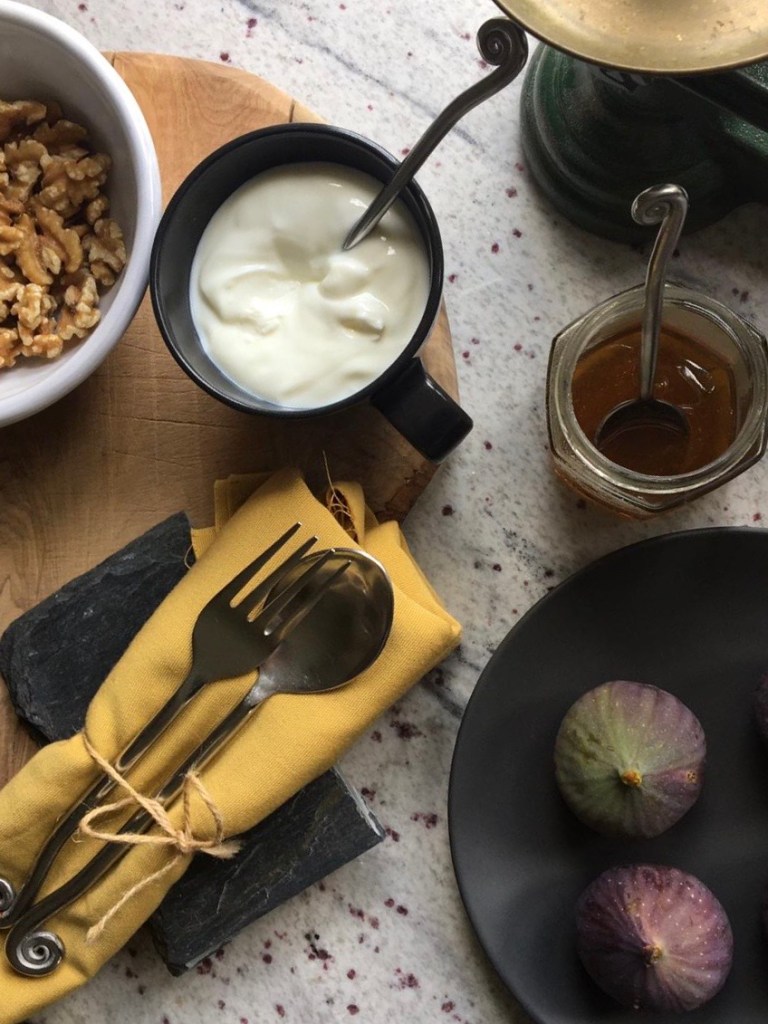
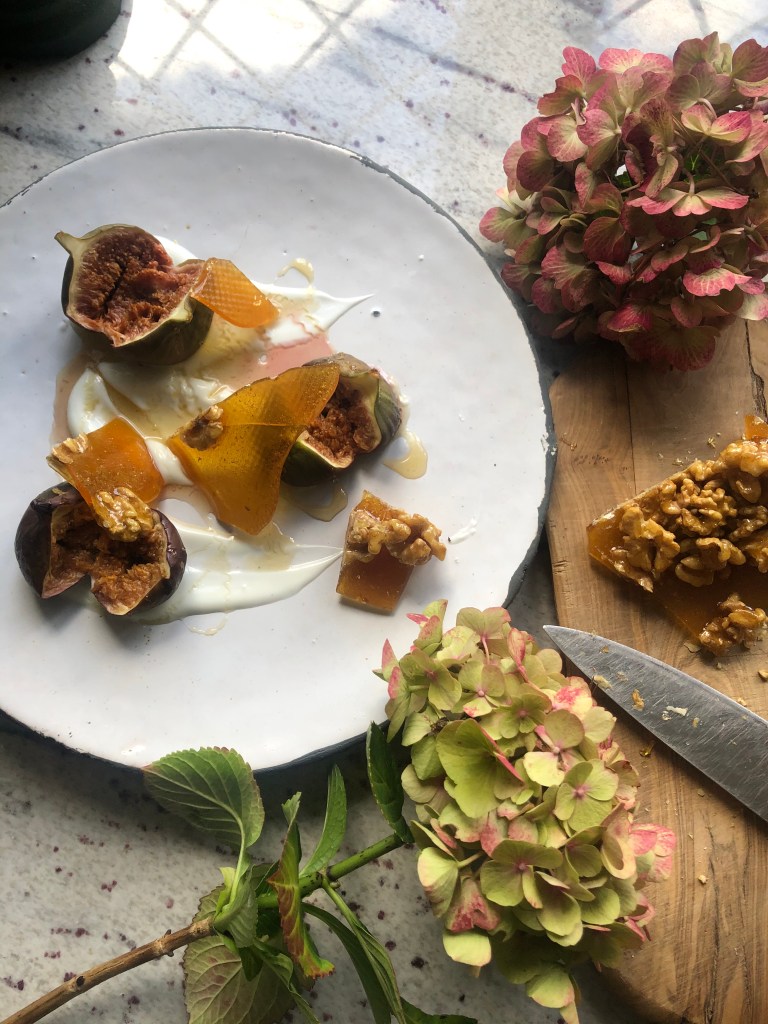
My autumn fig dish for Neptune served on their beautiful Corinium platter.
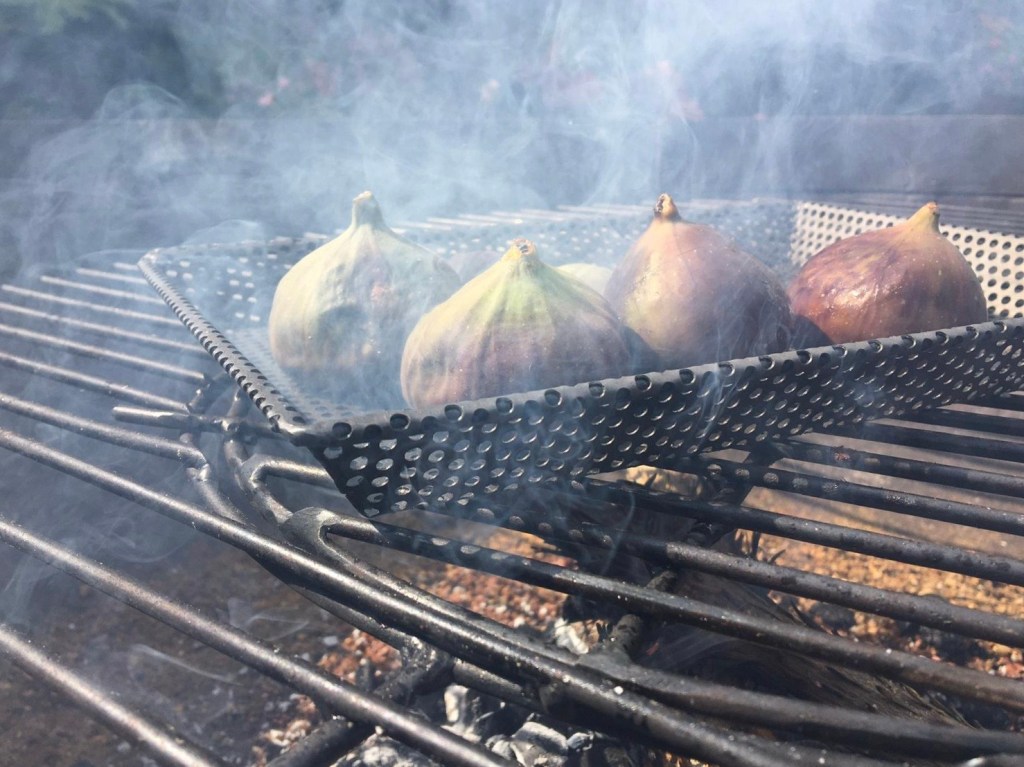
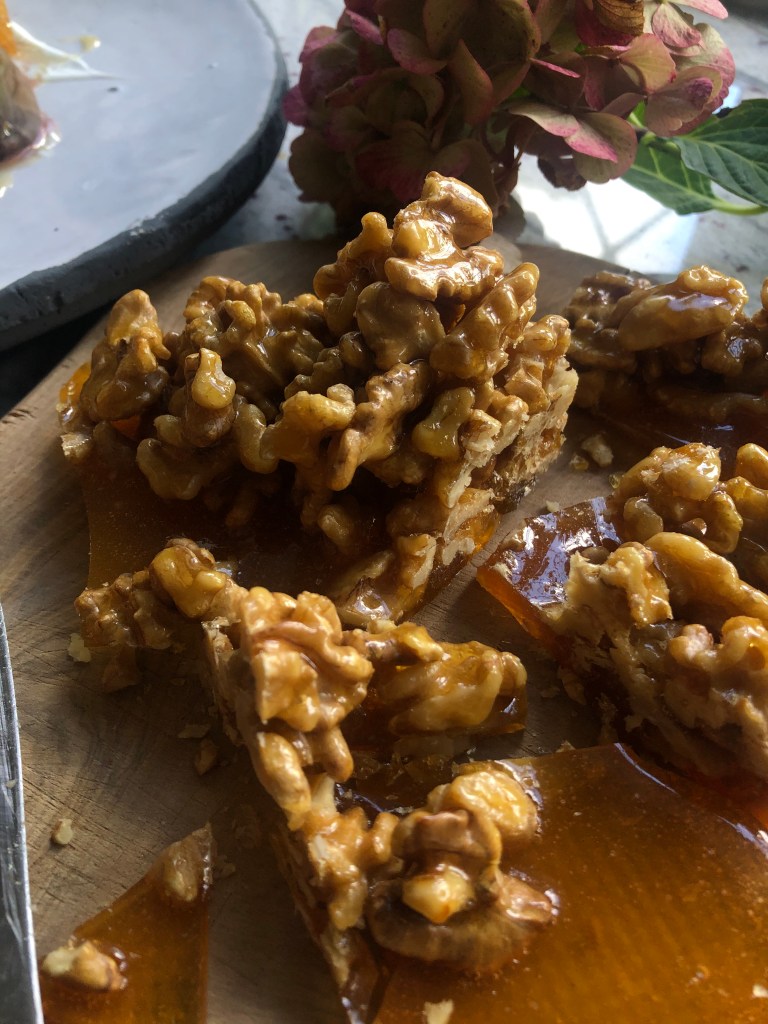
Roasted on my Kadai, served with Greek yogurt, local runny honey and finished with smashed walnut brittle
Walnut Brittle:

  1. To begin toast your 8 oz of unpeeled walnuts lightly to release their natural oils in a pre-heated oven of 180 degrees. 
  2. To begin your caramel put 8 oz of caster sugar into a medium saucepan and cover with just enough water.
  3. Place onto a high heat, you need to be careful that the sugar doesn’t burn keep an eye on your caramel until it turns a beautiful rich golden colour, the further you take the caramel the more bitter it becomes.
  4.  Add your warm walnuts to the caramel remove from the heat, and stir into your walnuts. 
  5. Line an oven tray with a piece of baking parchment, then tip onto the lined tray and allow to cool, until rock hard. 

Grilled Figs:

  1. For this dish I cooked my figs over an open fire as this imparts a wonderful smokiness to the figs. But you can use a griddle pan on the stove on a medium heat, you don’t need to add anything, just allow them to cook low and slow in their own natural juices until they are jammy and warm. 
  2. Allow to cool a little, then slice each fig in half to reveal the beautiful soft flesh. 

Serve on your favourite Neptune plate, add yoghurt in three swipes, then place a fig at the end of each swipe, drizzle your honey over the dish and lastly add your shards of walnut brittle. 

This dish is great for sharing in the garden with friends and family as we welcome fig season. 

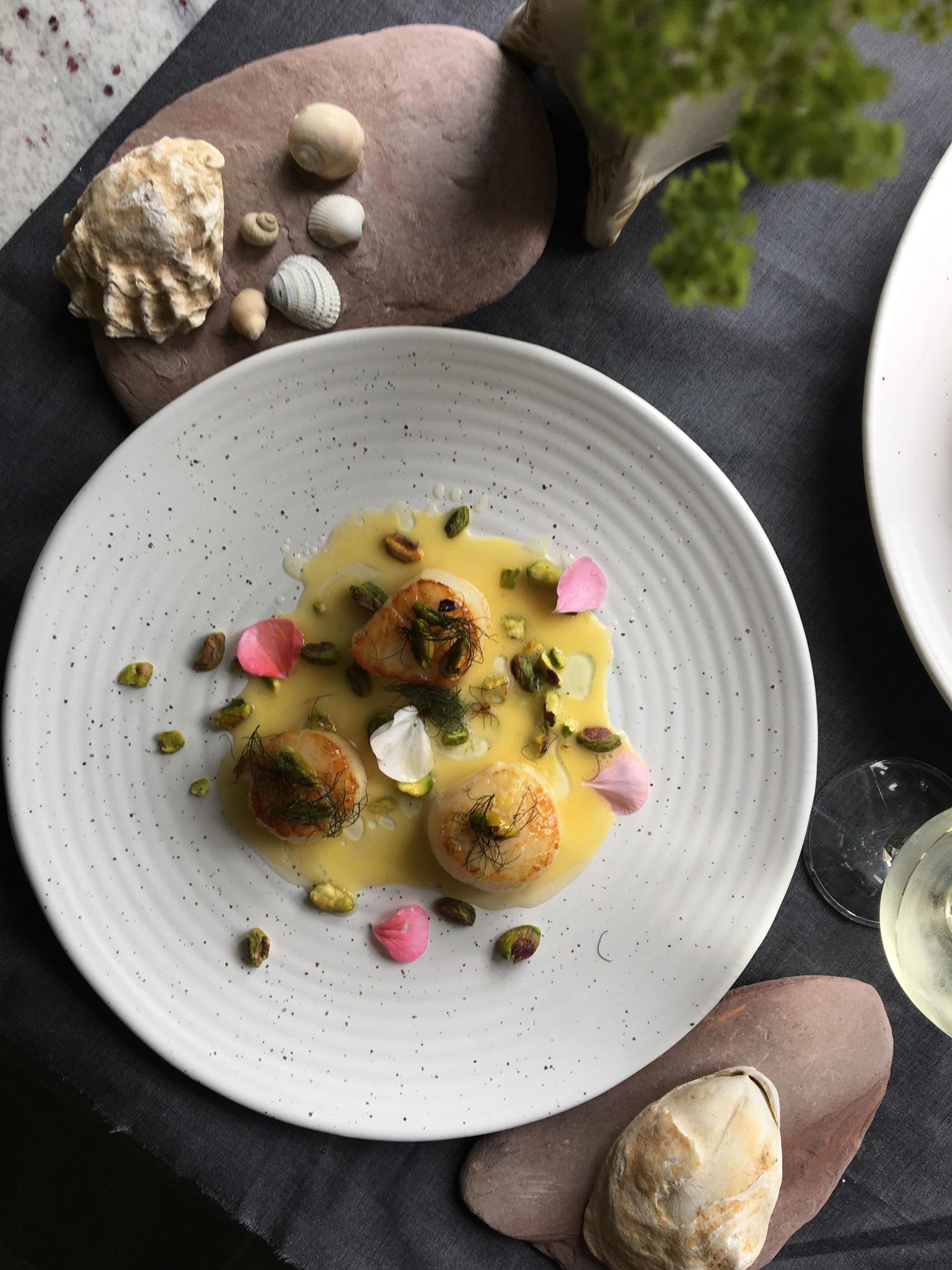
Pan seared Scallops, lemon butter sauce, toasted pistachio nuts and local honey

This delicate fresh dish is full of flavour and perfect for a starter or light lunch. I always try and support local independents when I buy my produce and Sandy’s Fishmonger in Twickenham had some beautiful Orkney Scallops. I collaborated with Neptune Home on this dish and have been working alongside the team at their Weybridge store to generate content, they kindly lent me these beautiful plates.

106302043_288840875598810_7226061945545764997_n106677735_275408357106984_7641779711554733517_n106750073_1732070640266886_356239197822506568_n84164998_3179998055418804_7420756122562112075_n106489123_323253672013931_4762192255214595432_n106352807_289449088791501_5169054027068725880_n

Lemon Oil
Juice of half a lemon
Zest of one lemon
20 ml of cold pressed olive oil
Pinch of sea salt / white pepper

1. In a jam jar add your lemon juice, zest and seasoning shake
2. Next add your olive oil shake to incorporate.
3. Taste
4. Place to one side to marinate


Toasted pistachio nuts:
250 grams of unsalted de-shelled Pistachio nuts

1. In a large frying pan over a medium heat, toast as this helps to release their essentials oils, whilst the pistachios are still warm lightly crush to increase texture.
2. Reserve to one side till required later on at plating.

Local runny honey:
1. Drizzle over the finished dish when served.

Lemon Butter sauce:
20 grams of unsalted butter diced
Juice and zest of one un-waxed lemon
50 ml of good quality white wine
20 ml to deglaze
Pinch of sea salt
Pinch white pepper

1. To begin in a medium saucepan add your white wine reduce by half
2. Next deglaze with the 2o ml of white wine.
3. Whisk in the butter cube by cube to form a creamy emulsion.
4. Season
5. Add your lemon juice and zest.


Pan seared scallops:
8 large prepped scallops.
Seasoning
Twist of lemon

1. To begin place a heavy based pan onto a medium heat.
2. Once the pan smokes add a little olive oil, season your scallops.
3. Add to the pan cook till golden in both sides
4. Add a knob of butter and baste
5. Remove from the pan rest onto a j cloth to absorb any excess butter from the cooking.

To plate pre-warm your Neptune artisan plate and plate your scallops into a large circle, top each with a little of your butter sauce, drizzle with your scented olive oil to form a split sauce, add your toasted pistachio’s and lastly I love to garnish with a drizzle of honey.
Lastly add fresh garden bronze fennel delivers an aniseed note.
Enjoy,
The Gourmet Gent.

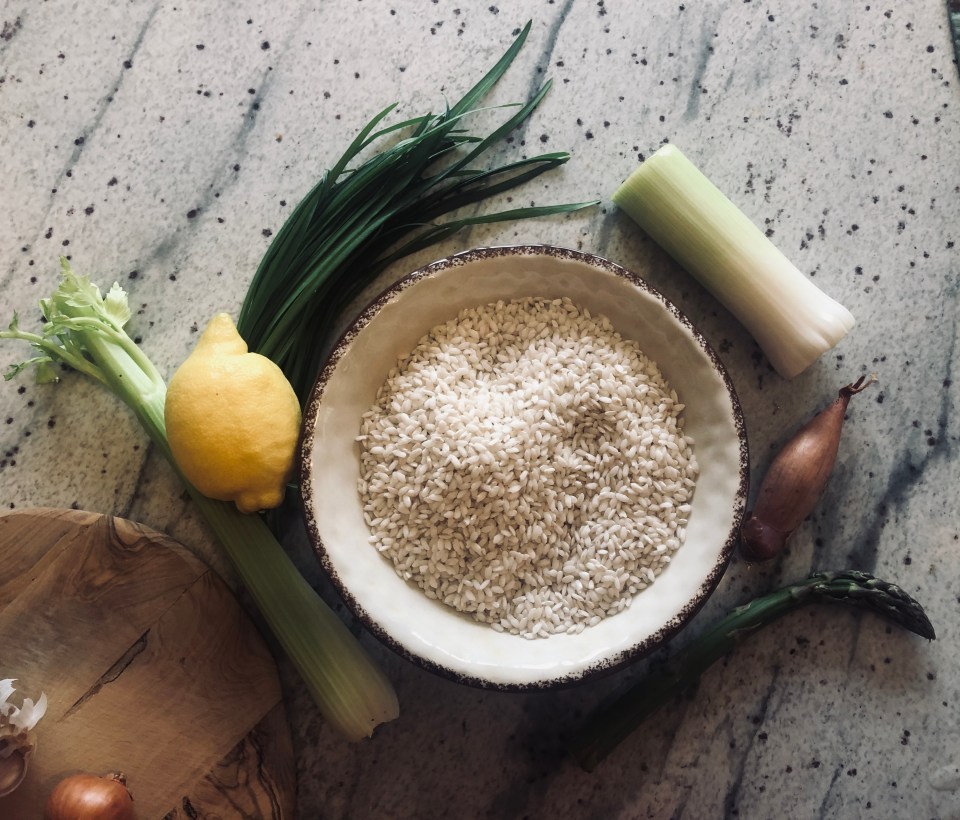
Spring Risotto

IMG_4955IMG_5040IMG_5938IMG_2356IMG_9128IMG_2050IMG_0135IMG_3795IMG_3718IMG_3858IMG_3054Vegetable Stock:

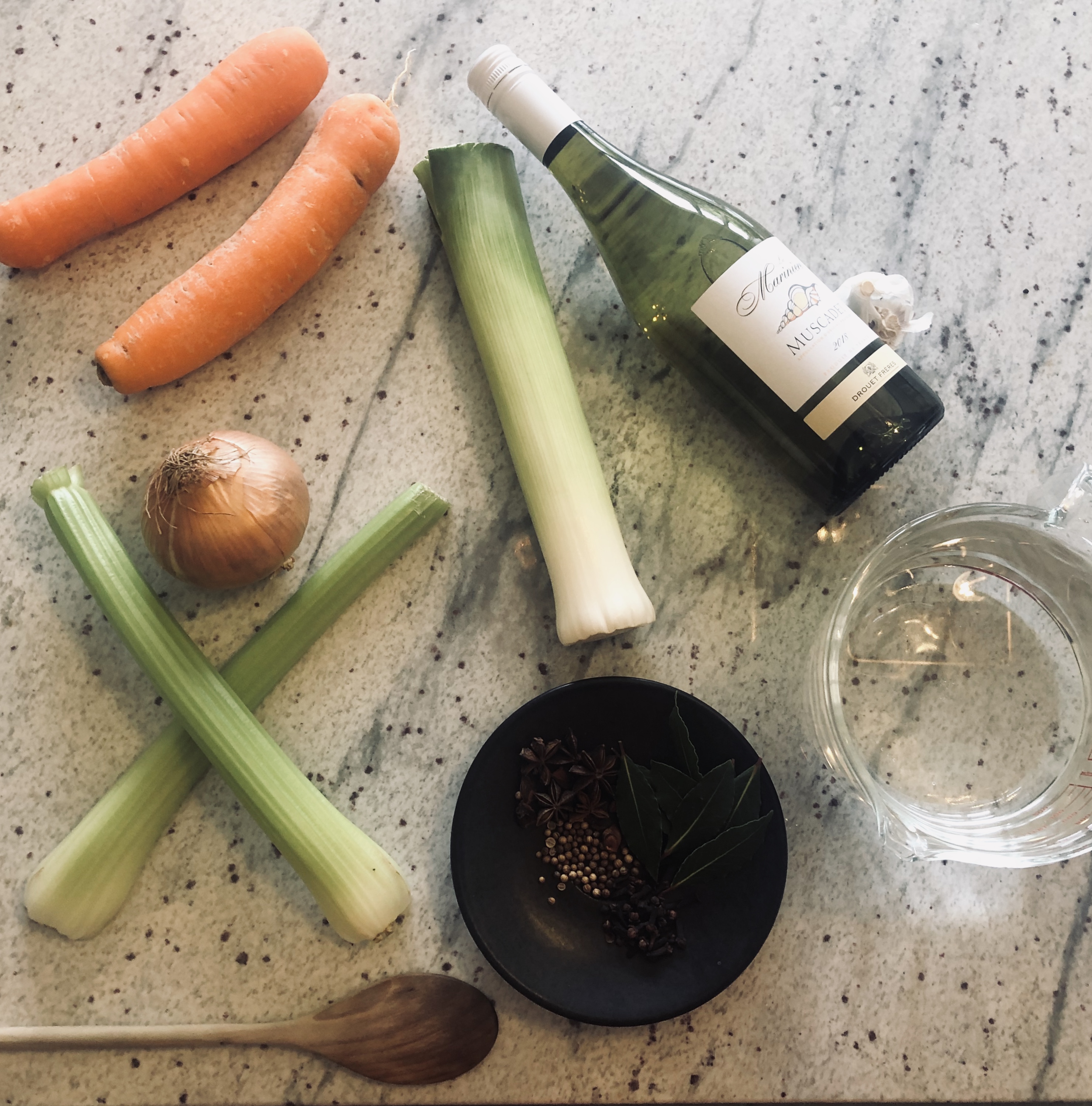
  • 2 carrots
  • 1 white onion
  • 2 sticks of celery
  • ½ leek washed
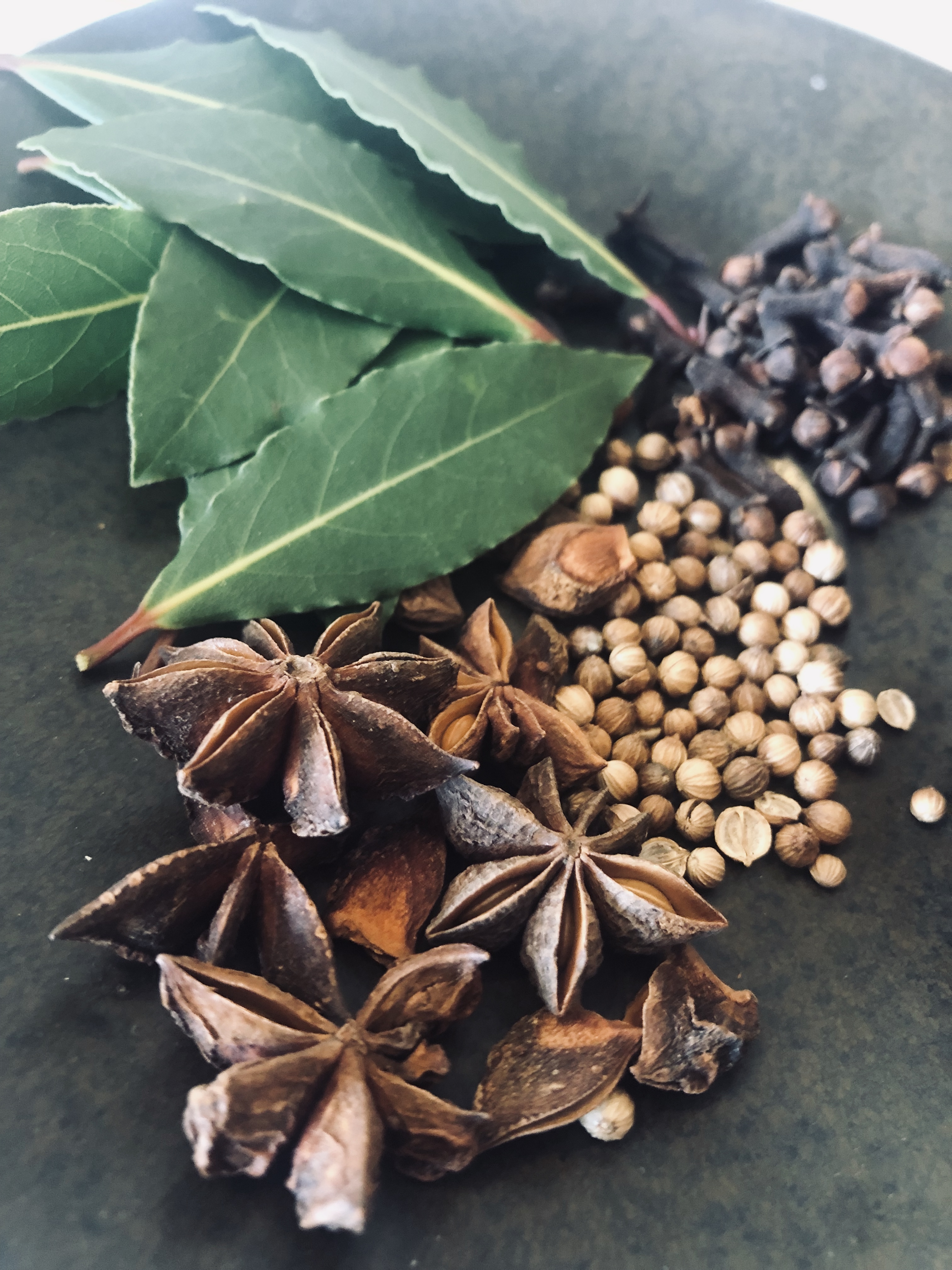
  • Coriander seeds
  • Four bay leaves crushed and bruised
  • ½ teaspoon of Cloves
  • ½ teaspoon of Star Anise
  • 200 ml of Muscadet
  • 2 litres of cold water
  1. To begin this stock, place a large pan onto a medium heat with a touch of oil.
  2. Once the pan has began to lightly smoke, add in your cut vegetables, allow to colour as this helps to impart flavour and depth to your stock.
  3. Once your vegetables are lightly golden brown and tender, add your 200 ml of white Muscadet.
  4. Then crush your aromats and allow to infuse in the wine as this again gives the wine another depth of flavour, additionally if you crush and bruise your bay leaves, t you have that beautiful aniseed aroma.
  5. Once the pan is deglazed add your water and allow to infuse for at least 30 minutes, bring the stock to the boil and then reduce to a low simmer as this allows the stock to relax.
  6. Once at this point pass and strain the stock through a chinois as this helps to remove any impurities from the stock

N.B – Reserve the vegetables as these can be used to cook with a gammon or ham hock, as this dish promotes no waste, pure goodness!

Risotto:
Base:

  • 2 sticks of celery finely bruised
  • ½ leek finely sliced
  • 2 cloves of garlic crushed and diced
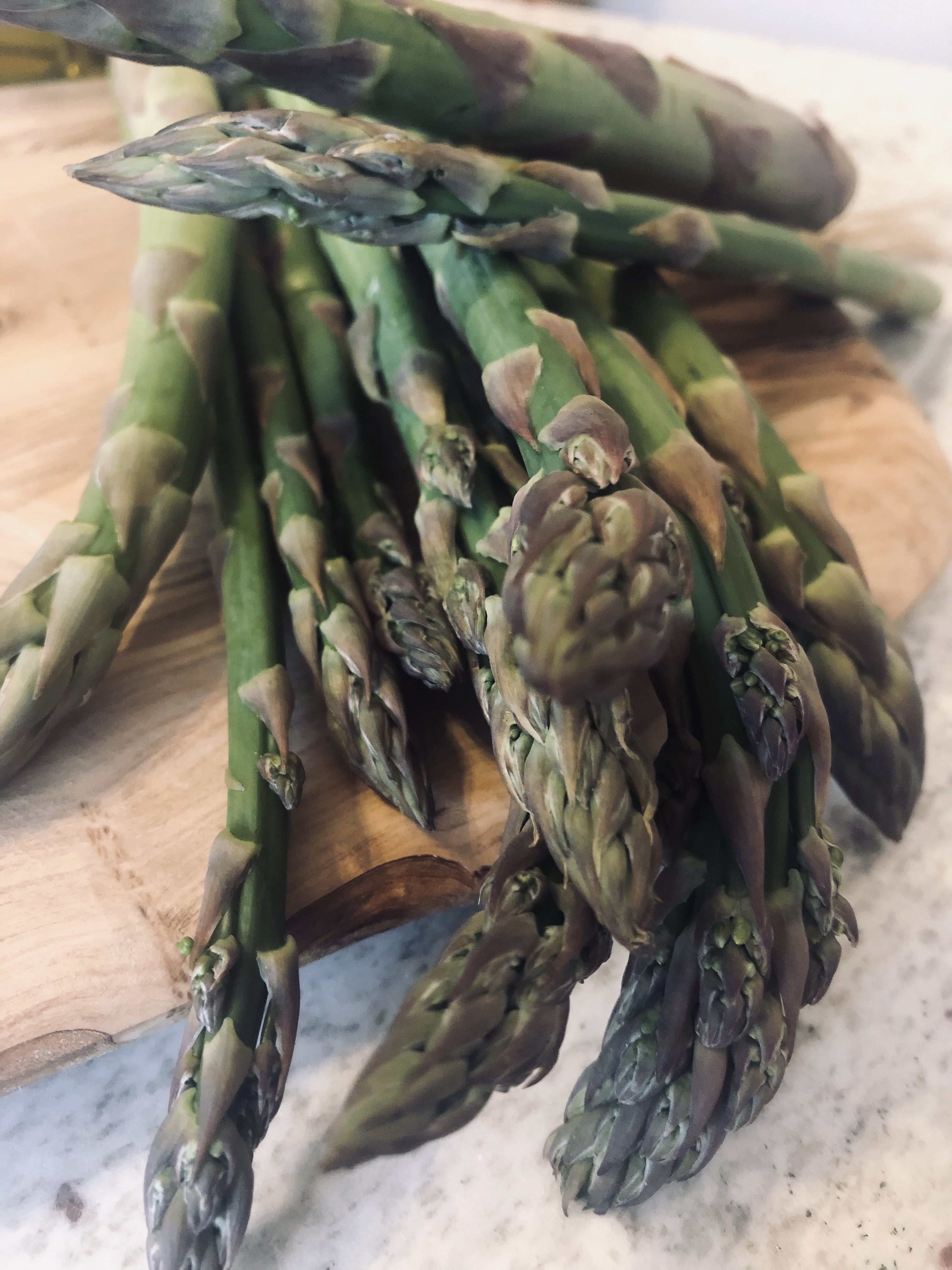
  • Asparagus (trimmed)
  • Three Cornered garlic
  • 800 grams of risotto rice
  • 100 ml of Muscadet white wine
  1. To begin your base, place a medium sized pan onto a medium heat, once the base has come up to temperature add a dash of olive oil then add your base as this is what makes the risotto.
  2. Ensure that you cook the risotto base slowly and over a low heat as this helps to release their essential oils and flavour.
  3. This takes around 25-30 minutes add a little salt and pepper as this helps to form the base of the risotto.
  4. Next deglaze with a little Muscadet white wine, once the wine has reduced and glazed add your risotto rice and allow to toast – by toasting the grain, you allow the rice to open up which helps to release their starch, which in turn thickens up the risotto.
  5. Next add your three cornered garlic, and once the rice is ready add a ladle of stock one at a time.
  6. Allow the rice to absorb the stock. As this helps to ensure a creamy and luxurious risotto.
  7. Make sure to add enough stock at a time. Ensure that the rice is al dente (meaning a little bite)
  8. To finish the rice off you can add a knob of butter, which helps to gives the rice a gloss and shine, but for dairy free eaters add a little cold pressed olive oil.

The Asparagus

  1. Add your asparagus, to a lightly oiled tray with a little sea salt black pepper and lemon juice
  2. Place under a grill and griddle until tender and sweet
  3. Allow to cool, then squeeze over the charred lemons which at this point are juicy and sticky.

To accompany this dish slice some rustic bread and toast, then slice a clove of garlic in half and rub over the bread drizzle with cold pressed olive oil and place onto a wooden board and serve.

To plate
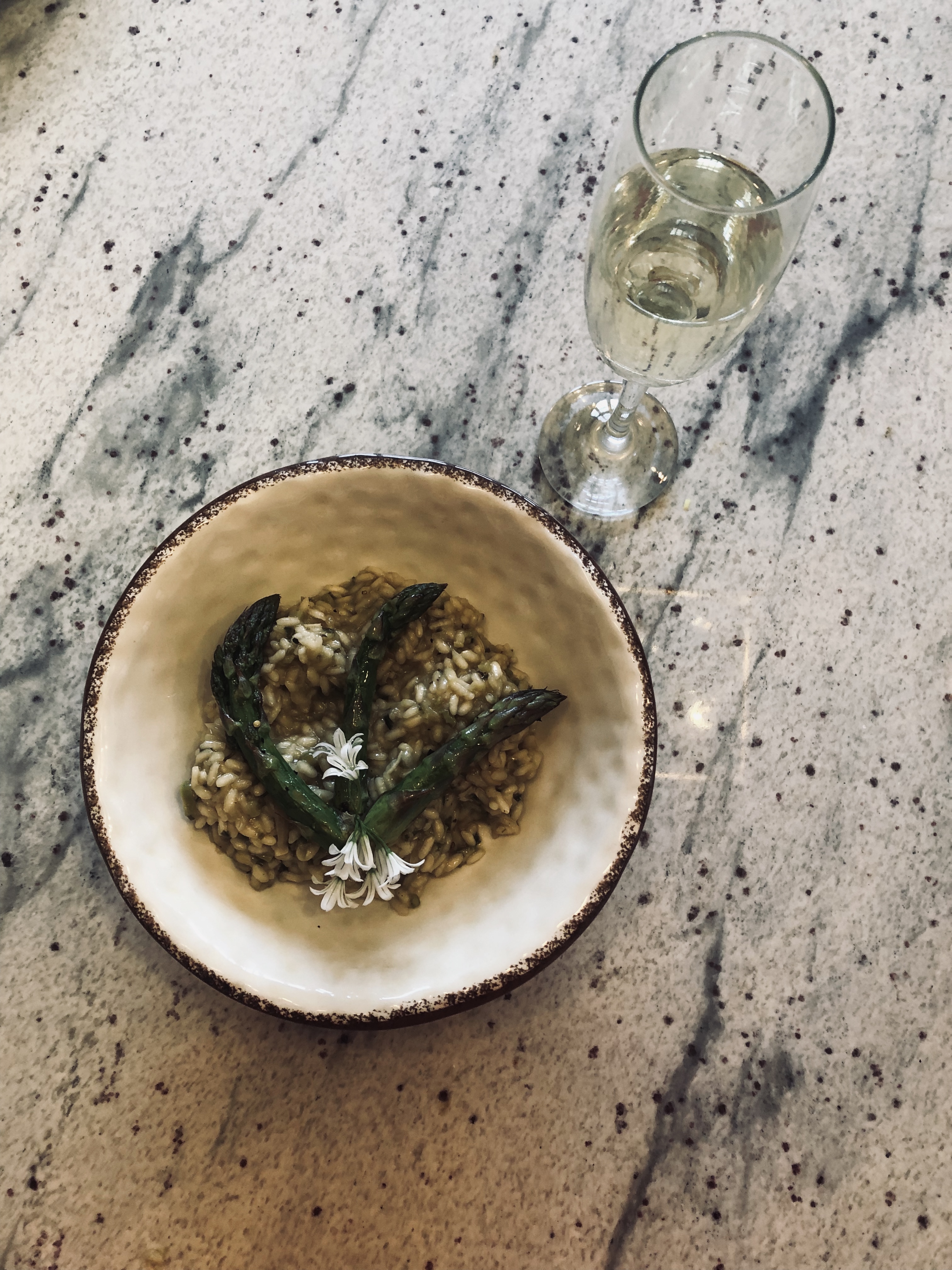
In pre-warmed artisan bowls, serve up your risotto and top with your lemon char grilled asparagus, add three per dish. Top with your foraged wild three corned garlic flowers.