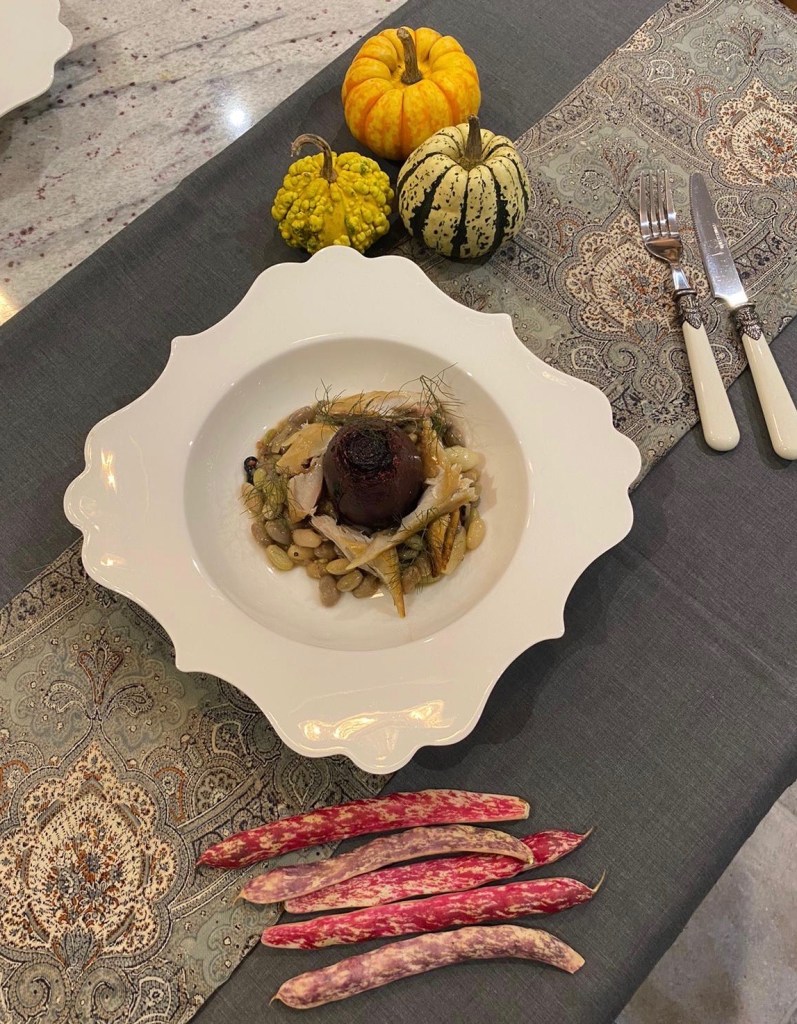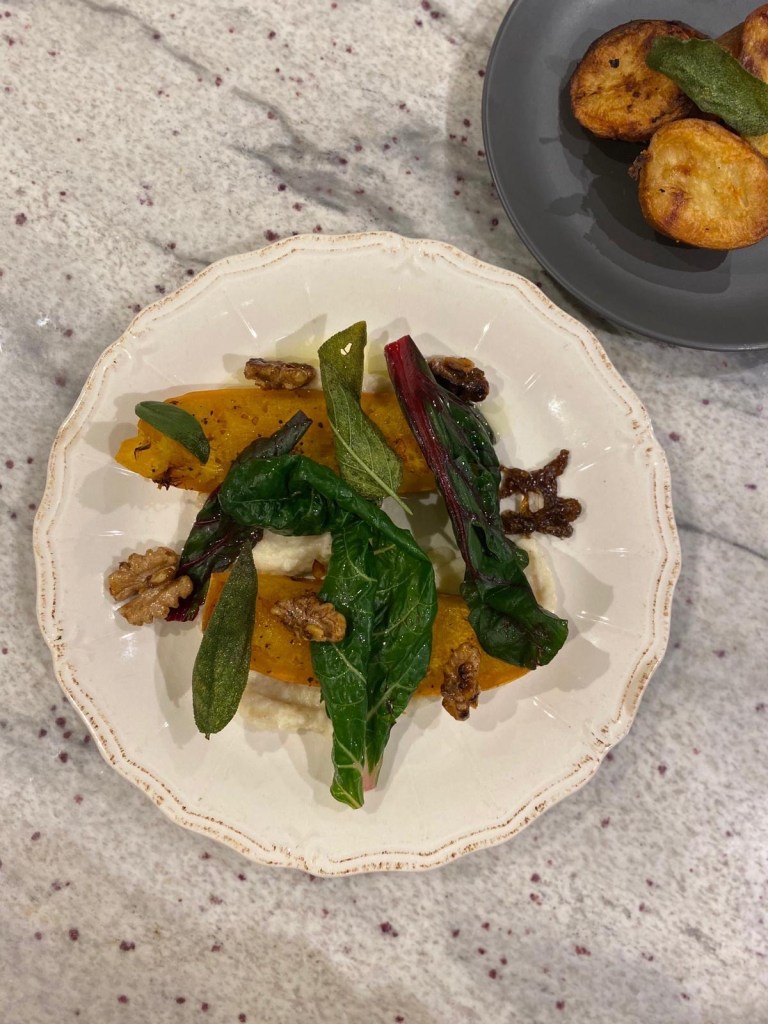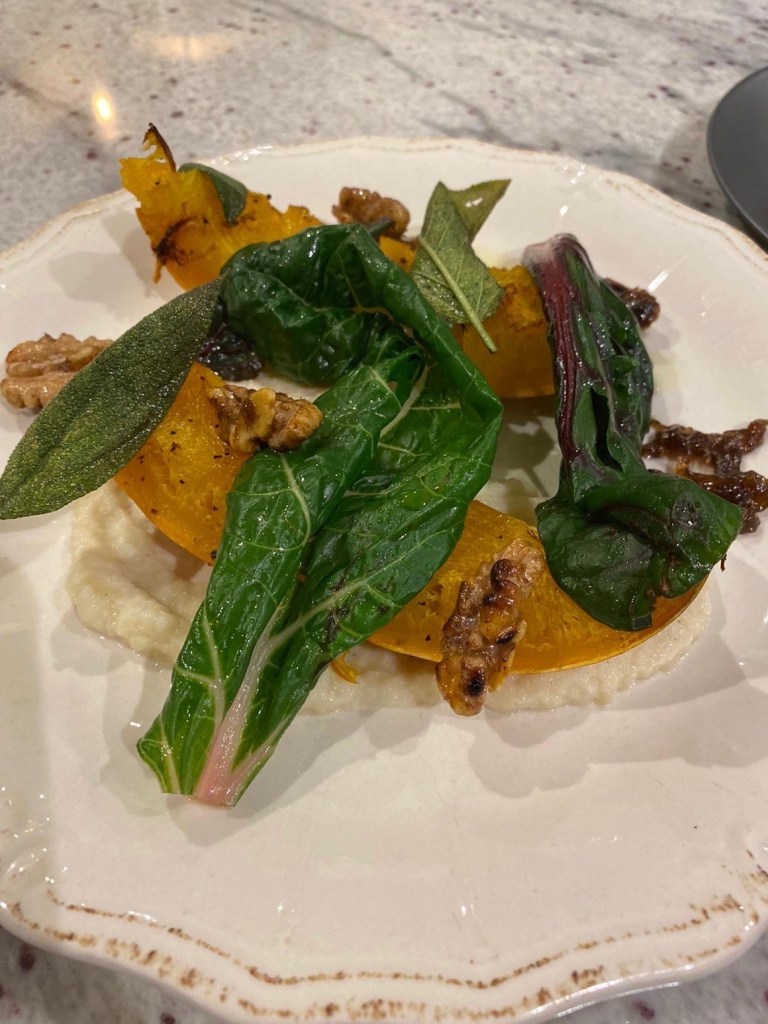
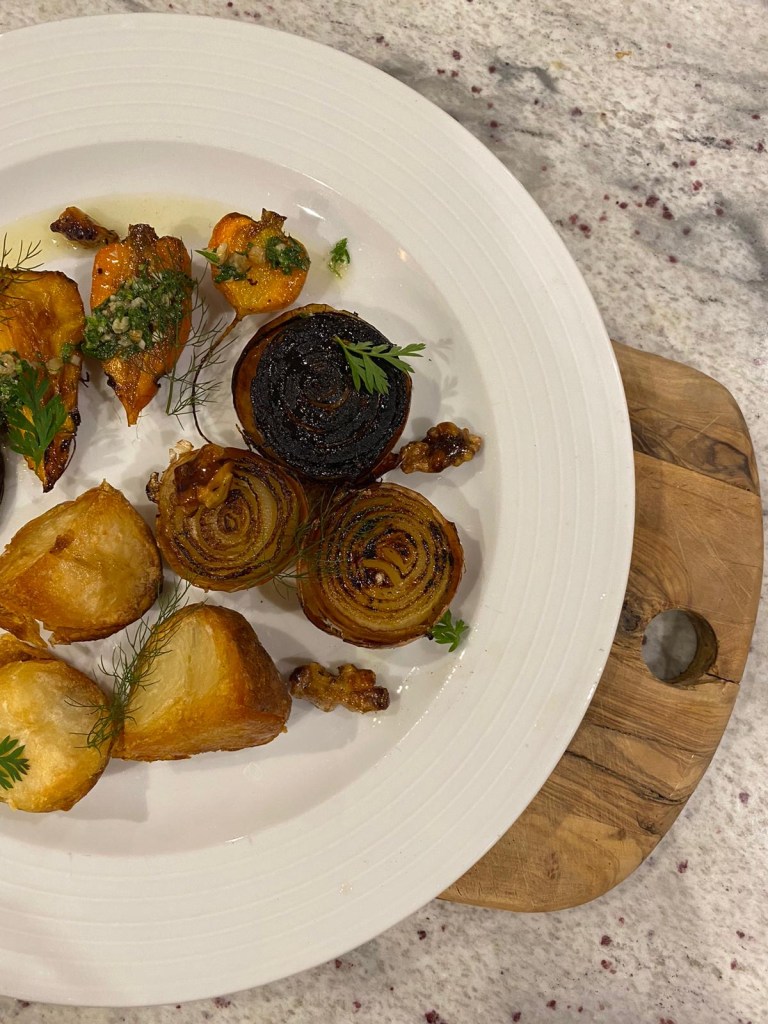
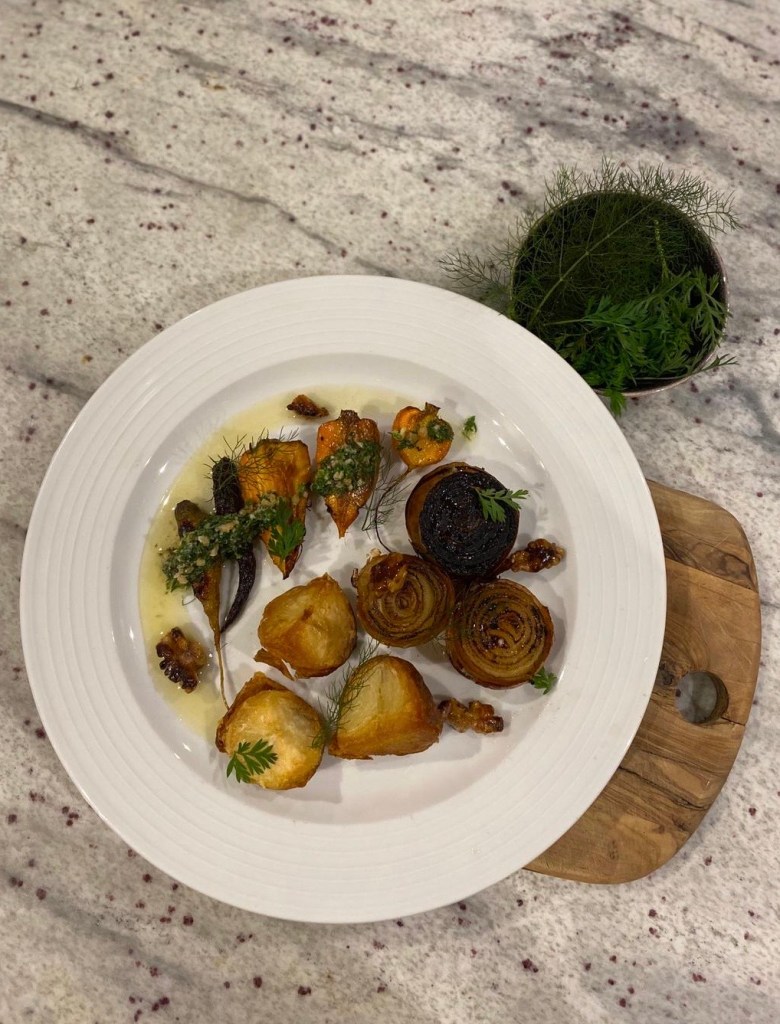
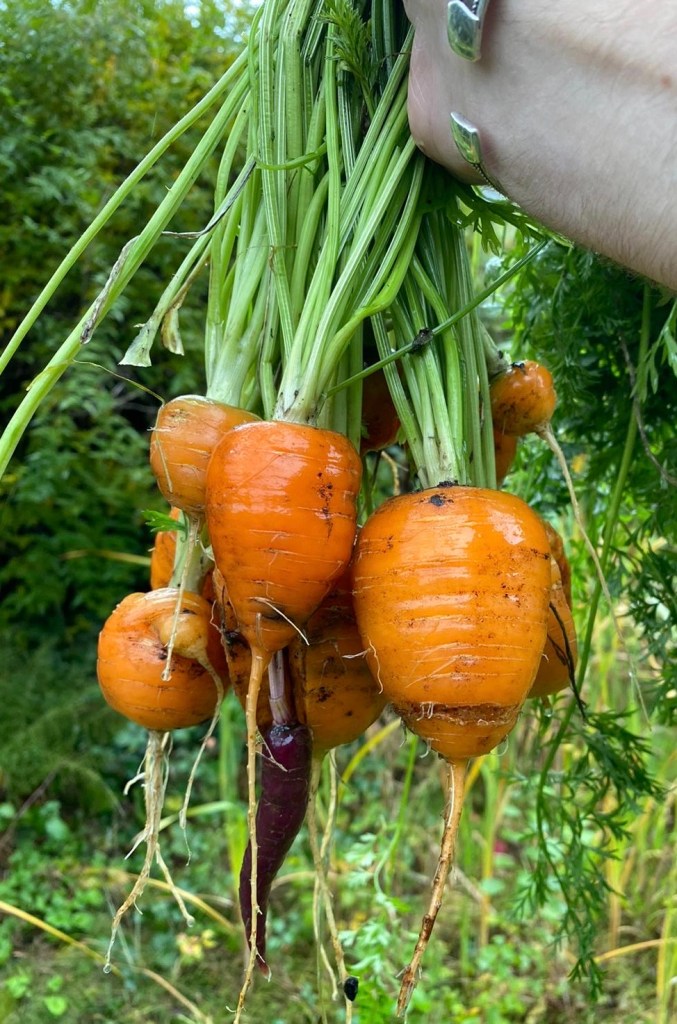
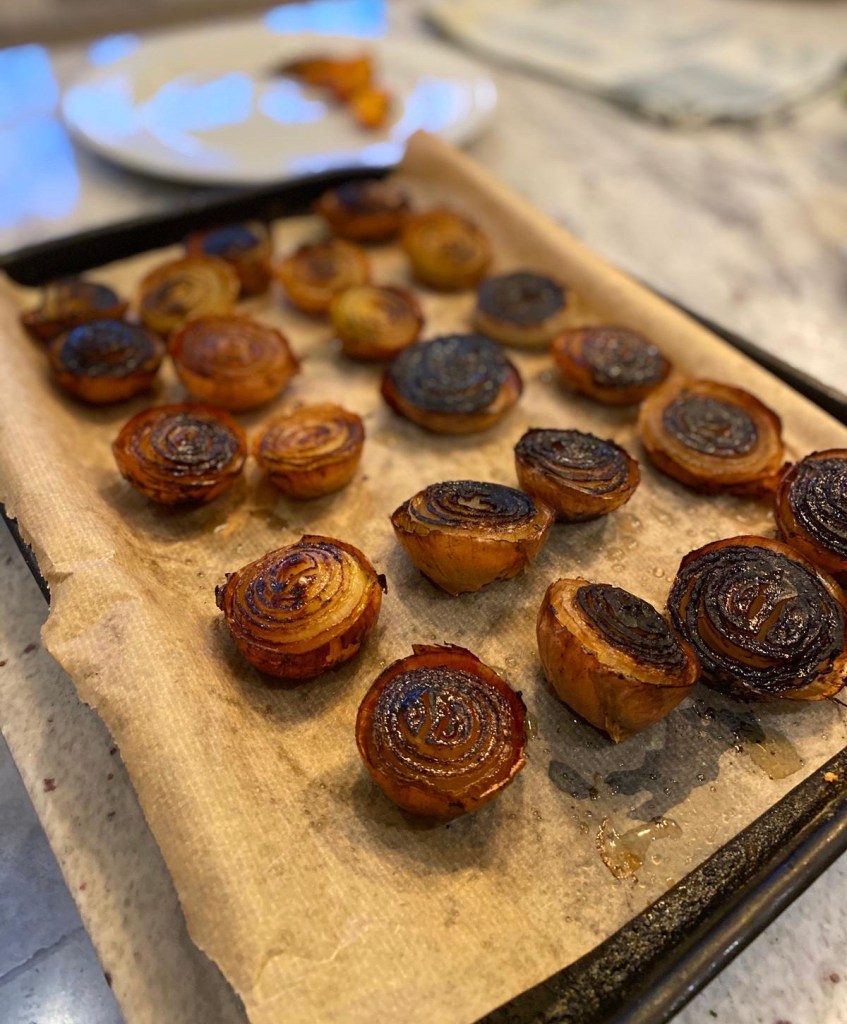
My latest dish for Neptune Weybridge – Roasted heritage carrots, burnt onion halves, carrot top pesto, roasted garlic and sage potatoes, topped with fennel tops and fresh carrot shoots

Roasted Garlic and Sage Potatoes:

  • To begin wash 1 kg of King Edward potatoes and cut them into equal sized pieces, fill with cold water and place onto a medium heat with a pinch of sea salt.
  • Once the water has come up to a boil reduce to a medium simmer and poach for around 30 minutes till they are part boiled and can be pierced with a paring knife. 
  • Drain and allow to steam, as this helps to form a fluffy and crunchy potato once roasted, additionally you can rough them up a little in the pan to create even more crispness. 
  • Next pre-heat your oven to 200 degrees (or gas mark 9) and place a roasting tray in to the warm oven, then add your olive oil, carefully add your potatoes and roast for 30 minutes
  • After this add your crushed garlic and sage and roast for an additional 15 minutes to get them really crunchy and crisp. 
  • Once cooked to perfection reserve to one side to keep warm till the plating begins. 

Burnt Onion Halves:

  • To begin slice your freshly pulled and drained onions in half, keeping the outer jacket intact.
  • Next place a large based frying pan onto a medium heat, once lightly smoking add a drizzle of olive oil and roast your onions till blackened and burnt as this helps to amplify their natural sugars that are found naturally in the onions.
  • Place them onto a baking tray which has been lined with baking paper and place into the oven to carry on the cooking. You want your onions to look like little roses.
  • Once soft, reserve in a warm place until required later on in the process. N.B. also try these for the best cheddar and onion sarnie. 

Roasted Heritage Carrots (freshly pulled from the garden):

  • Within 30 minutes of being pulled, I washed and trimmed the tops of the carrots.
  • Slice in half, lightly oil with good quality olive oil and season with a pinch of sea salt and black pepper.
  • Place into a roasting tray and roast at 200 degrees till lightly golden and a little caramelised, as these are so fresh you don’t want to over cook these carrots. 
  • Once roasted drizzle with an additional drop of olive oil and reserve to one side till required later on in the process. This dish is quite simple but highlights the beauty of the carrots and the fact that they are so fresh and different shaped. 

Carrot Top Pesto:

  • 200g of toasted walnuts
  • 4 garlic cloves (crushed, peeled and pureed)
  • Lemon Zest and the juice of the same lemon
  • 2 pinches of freshly grated nutmeg
  • 500 grams of freshly washed carrot tops
  • 150 grams of veggie parmesan cheese
  • Olive oil to loosen 
  • Sea salt and freshly ground black pepper (enough to season)
  • To begin, in a medium saucepan, lightly toast off your walnuts to release their natural oils and gently warm them through, tip out onto a chopping board and chop quite finely
  • Add to a glass bowl along with your pureed garlic cloves and a good pinch of seasoning, next add your nutmeg and olive oil. 
  • Now add your lemon juice and zest to lift the pesto, then add your washed and chiffonade carrot tops, they have a light celery note which is beautifully subtle and of course you are using part of the carrot which is often overlooked.
  • To finish add your parmesan cheese and taste, the pesto should be quite thick with a oily shine. Since you want to use this as a dressing for your freshly roasted carrots when they leave the oven and they will absorb all of the flavours. 

Honey glazed walnuts:

  • For your honey roasted walnuts, lightly toast off 500 grams of unpeeled walnuts (keep the peel as this gives the walnuts a great texture) 
  • As they begin to warm this releases the natural oils which are found in the walnuts therefore making them taste more walnutty, now add a little drizzle of olive oil and pinch of rock sea salt. 
  • Next, whilst the walnuts are warm add a spoonful of runny honey to the pan and toss to incorporate, ensure that your walnuts are coated evenly in the runny honey as you want each bite to have a sweet hit of honey. 

Garnish:

Freshly picked bronze fennel tops and carrot tops, aniseed and carrots are a match made in heaven. 

To plate pre-warm an artisan plate, arrange your carrots to the left hand of the plate dress and top with your pesto, allowing the oil to run a little. Next add your burnt onions in a three at the top of the plate, followed by your roasted potatoes, lastly top with your honey roasted walnuts and fresh fennel shoots. 
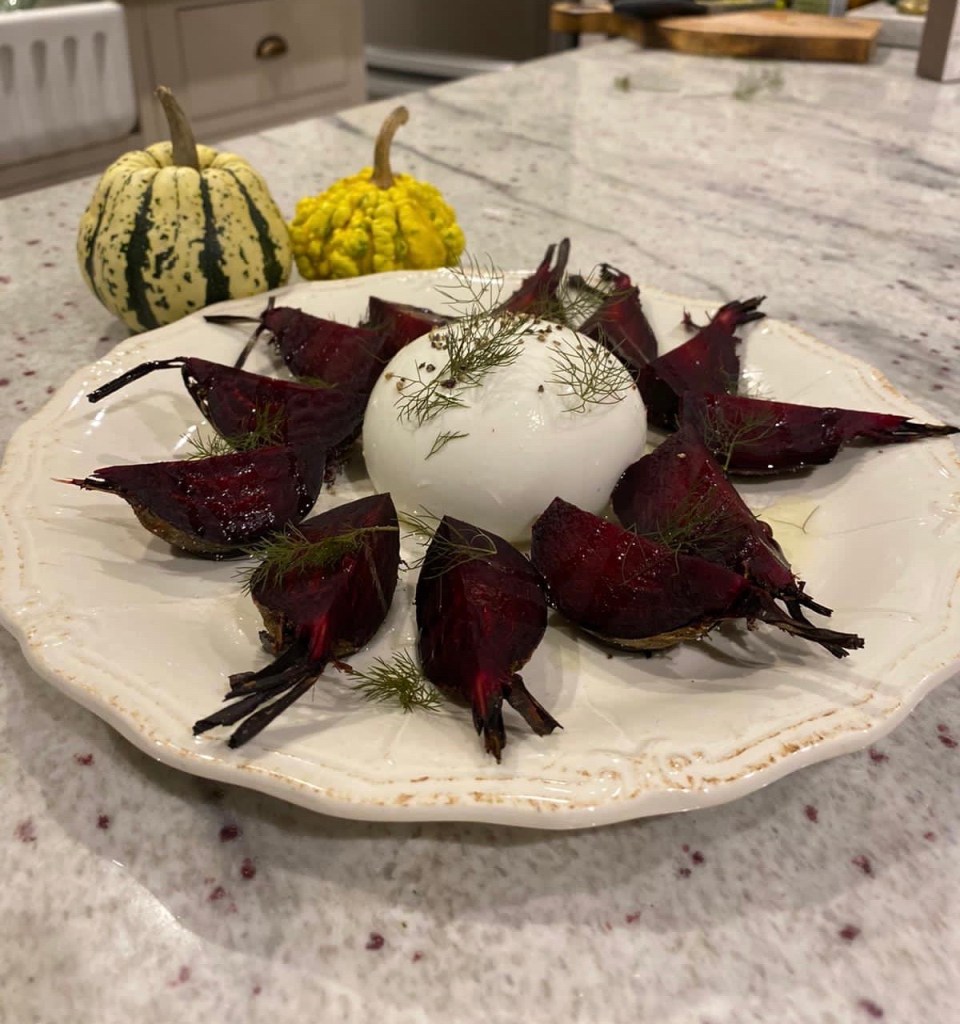
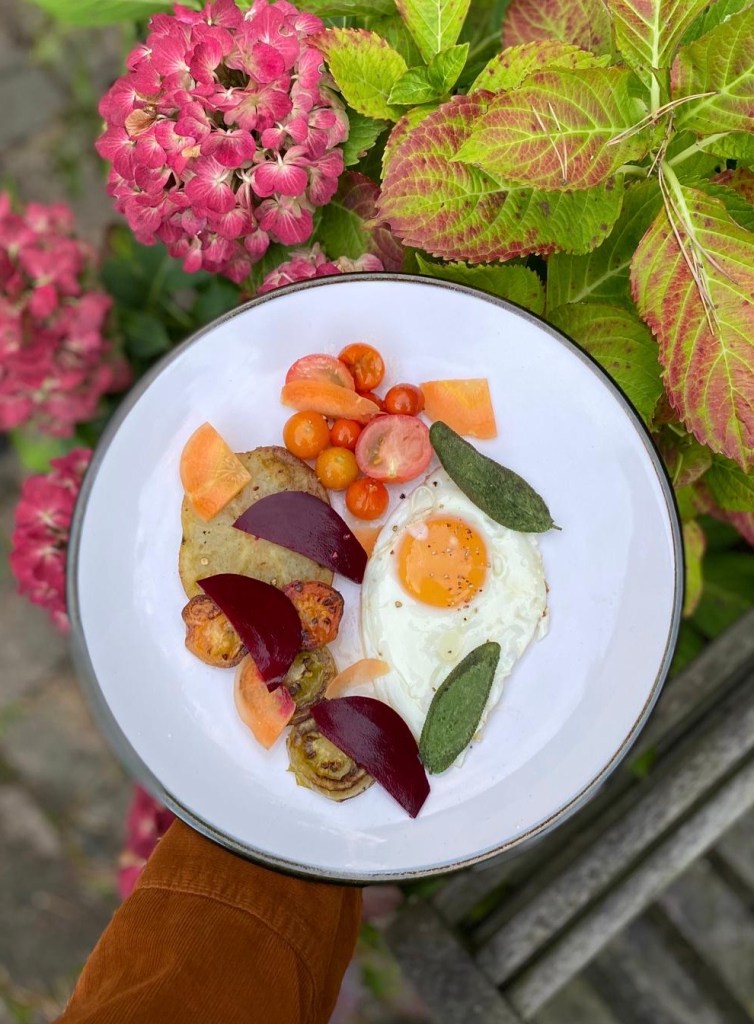
Green tomato fritter and marinated tomatoes, served with pickled beetroot slices, fresh raw carrot slices and a free range fried egg.


Green Tomato fritter:
This is a great way of using any green tomatoes which you may have still on your plants, usually these get made into chutneys and preserves. But by simply frying them in a little seasoned plain flour they make the perfect lunch snack.

1. To begin wash and slice your green tomatoes into large slices, not too thick as you want to cook these in the pan (so around 2 cm).
2. Next place a large frying pan onto a high heat with a touch of olive oil,
once the oil is hot, get your tomatoes ready by lightly dusting them with seasoned flour (to give them a crispy coating), add your sliced tomatoes to the pan that have been.
3. Cook on both slides till golden and crisp, once at this point place onto a
oven tray and leave in the oven for around 10 minutes at 160 degrees to
ensure that they are cooked all of the way through.
4. Reserve in a warm place till required later on in the plating process.

Pickled Beetroot Slices:
300 ml of re wine vinegar
3 teaspoons of granulated sugar
2 bruised bay leaves

1. For this element of the dish add your ingredients into a small saucepan bring to the boil so that the sugar has dissolved and allow to stand.
2. Place your beetroot slices into the liquor whilst it is still warm, as this will begin to cook and pickle the beetroot slices gently.
3. Place the beetroots along with their pickling liquor into a clean and sterilised jar.

For the Marinated tomatoes:
If your tomatoes are a little split then this dish is perfect, as it allows the tomatoes to bleed their natural juices into the basic dressing of olive oil, red wine vinegar and pinch of both sea salt and black pepper

1. Allow your tomatoes to stand in this mixture for at least an hour, as this enables them enough time to marinate and absorb the dressing, this basic dressing helps to elevate the humble tomato.
2. Stand at room temperature till required as the coolness of the fridge will mute their sweetness and freshness.

Crispy Sage:
Lightly fry off your sage leaves in a touch of olive oil till golden and crispy as they give amazing texture and mouth feel to the dish.

Fried egg:
1. To begin place a large frying pan onto a medium heat, add a little olive oil, once the oil is lightly warmed add your free range eggs.
2. Cook till the white is hard a little crisp and the yolk golden and runny.
3. By cooking your egg on a low and slow heat you help to ensure the fat
doesn’t spit everywhere but also you have more control over the cooking
process. Once your egg is ready, remove and place onto a piece of j cloth to
absorb any leftover cooking oil.

Raw carrot:
Freshly pulled carrots taste best literally quickly washed and sliced thinly
embracing their natural sweetness and crunch.

Plate onto a pre-heated artisan plate add your fried egg to the right finished
with a twist of pepper and sprinkle of pink sea salt.
Then add your green tomato fritter slices, next top with your pickled beetroot slices, raw carrot and lastly your marinated tomatoes. Not forgetting your crispy sage!

This dish works perfectly for a Chef’s Lunch or a light dinner.
The GG

Garden Chorus

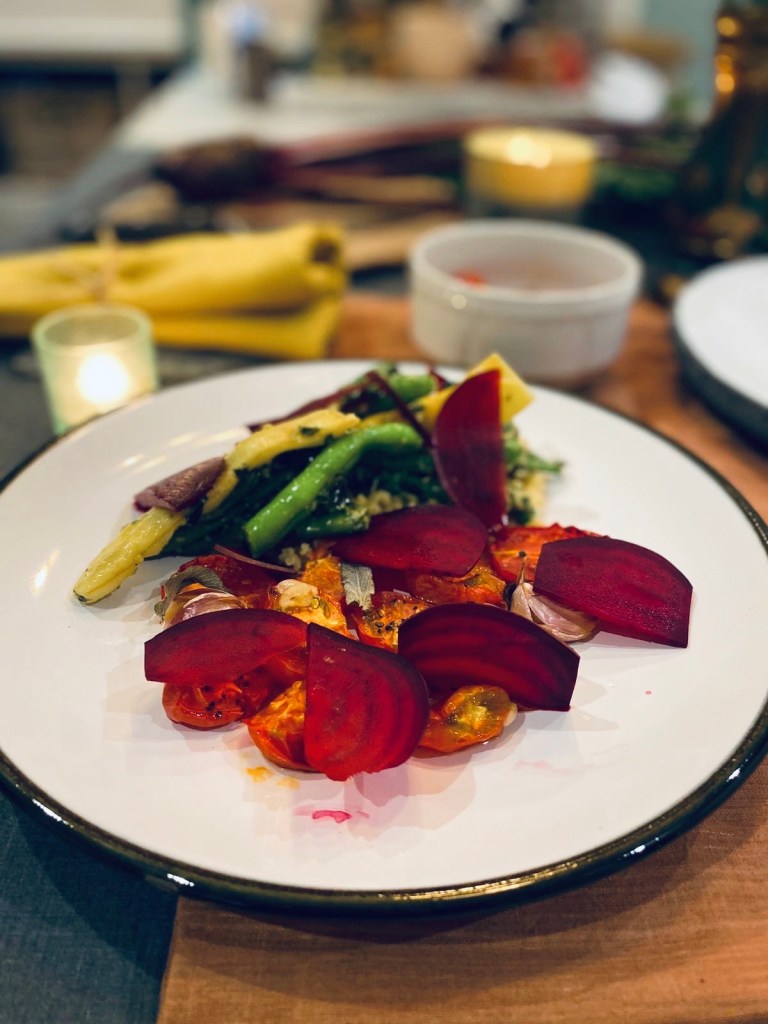
This dish is a chorus of the seasonal produce which I have harvested from my veggie patch. 

Raw and Pickled red beetroots:
Freshly pulled from the ground, for this part of the dish to really celebrate the beet, I decided to serve them both raw and pickled, to impart different texture.

1. For the raw option, wash your beetroot really well to remove any mud.
2. Trim the top and bottoms off the beetroots using a sharp knife, sliced thinly and leave them to one side for later.

For the pickled element:

  • 300 ml of red wine vinegar
  • 3 teaspoons of granulated sugar
  • 2 bruised bay leaves
  1. Add your ingredients into a small saucepan, bring to the boil so that the sugar has dissolved and allow to stand.
  2. Place your beetroot slices into the liquor whilst it is still warm as this will begin to cook and pickle the beetroot slices gently.

Marinated and Roasted tomatoes:
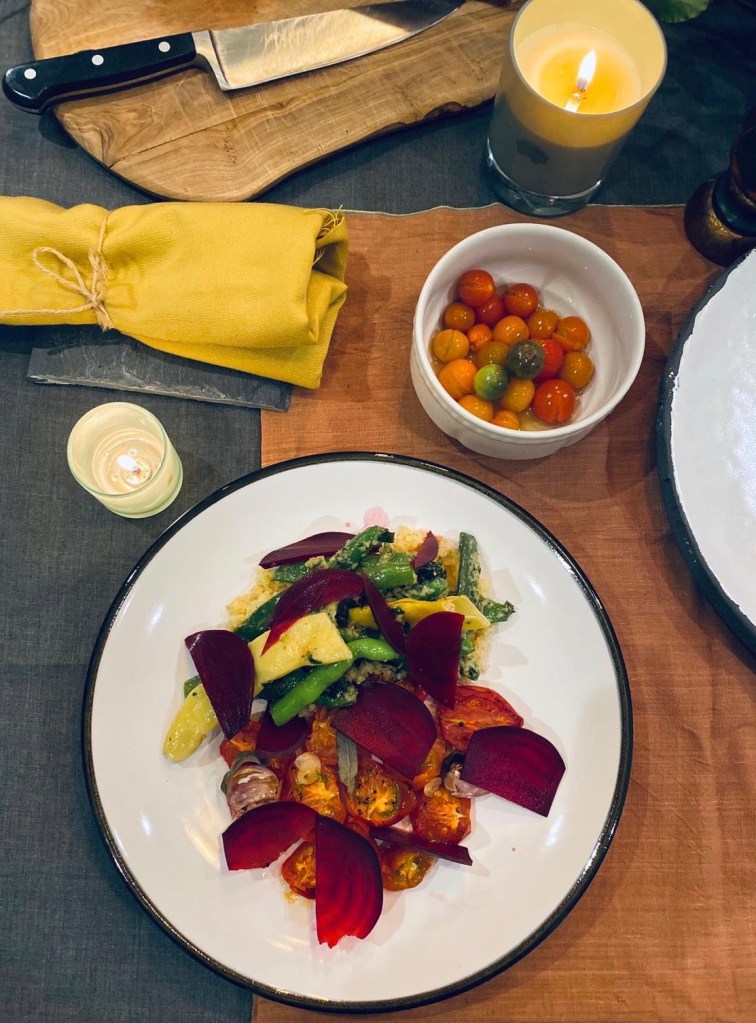
This element of the dish really celebrates the beautiful tomatoes which were one of the best crops this year, offering different colours texture and aromas.

For the roasted tomatoes:

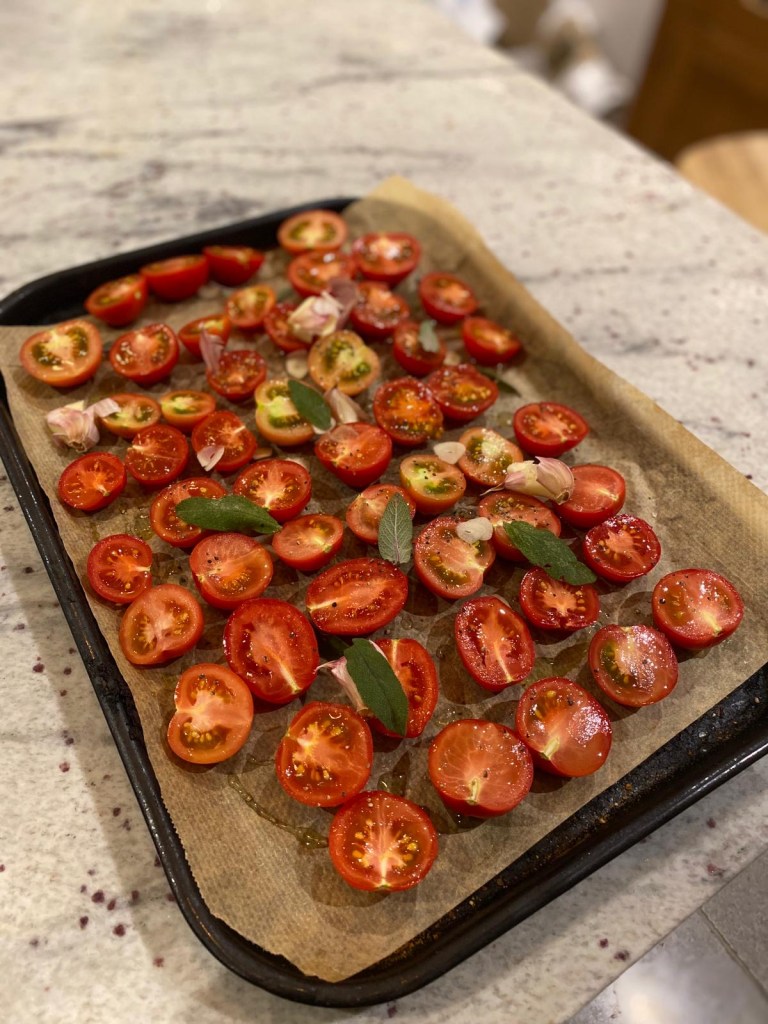
  1. Select your largest tomatoes, wash and slice them in half and place them onto a lined baking tray with baking parchment.
  2. Once your tomatoes are sliced season with sea salt and black pepper. 
  3. Next add some fresh garden sage and garlic cloves that have just been pressed with the back of the knife to open them up to release their perfume and aromas. 
  4. At this point pre-heat your oven to 160 degrees. 
  5. To finish drizzle with olive oil and place into a preheated oven of 160 degrees, as you want to cook the tomatoes low and slow to effectively confit them in their own juices.
  6. Once the tomatoes are ready allow them to cool in the oven and rest till required later on in the plating process. 

For the Marinated tomatoes:

  1. To begin if your tomatoes are a little split then this dish is perfect, as it allows the tomatoes to bleed their natural juices into the basic dressing of olive oil, red wine vinegar and pinch of both sea salt and black pepper allow your tomatoes to stand for at least a hour. 
  2. Allowing enough time to marinate and absorb the dressing, this basic dressing helps to elevate the humble tomato. 
  3. Stand at room temperature till required as the coolness of the fridge will mute their sweetness and freshness. 

An assortment of beans:
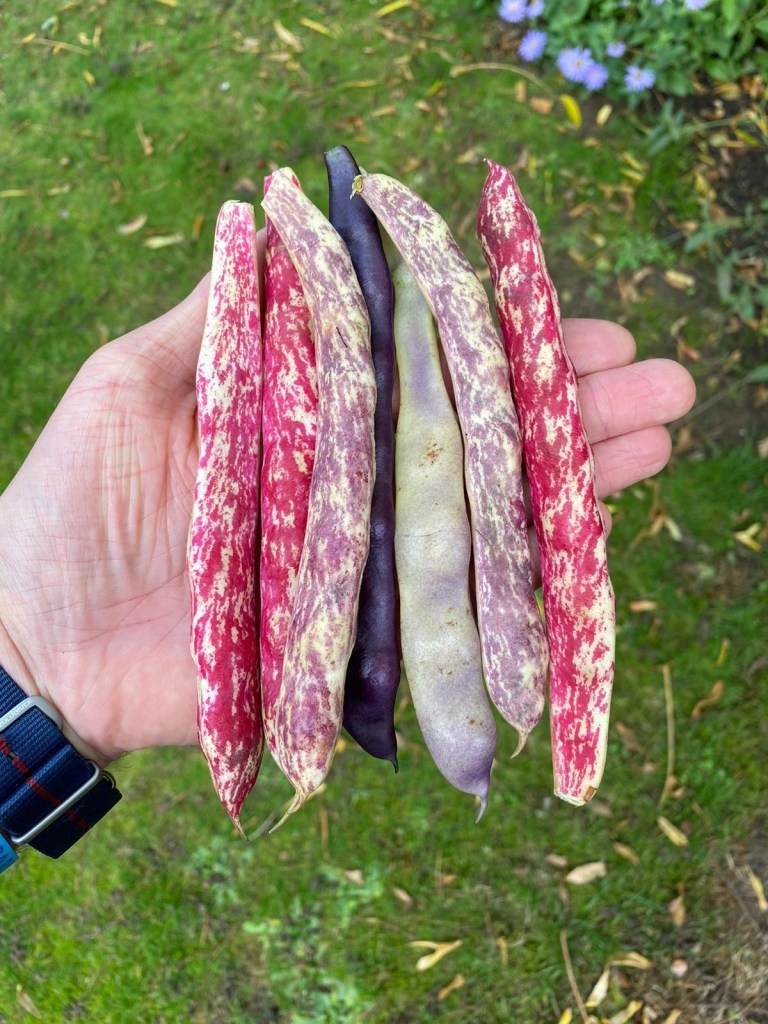
For this dish I used a selection of beans ranging from fine French beans, purple fine beans and yellow hanging beans, each imparting their individual flavour profile and texture.

For this element I wanted the bean to sing so…

  1. Simply top and slice in half so that they cook at the same time and are a little easier to eat.
  2. To cook your beans blanch them in to boiling salty water and cook for around 3-4 minutes so that they still keep a little bite. 
  3. Once your beans are ready and still warm place them in the garden basil pesto as they want to absorb flavour whilst they are still warm. 

Garden Basil Pesto:

  • 60 grams of lightly toasted pine nuts to release their natural oils  
  • Two bunches mint basil and Basic from the garden around
  • 4 garlic cloves pureed 
  • Pinch of sea salt 
  • Pinch of black pepper 
  • Lemon zest 
  • Lemon juice of one lemon
  • Good quality olive oil 80 ml (don’t worry if you don’t use all of this)
  • 50 grams of grated Parmesan
  1. To begin add your toasted pine nuts to a large pestle and mortar, crush them to make a thick paste.
  2. Next add your garlic cloves that have been pureed, and muddle together with a little olive oil. 
  3. Now add your pinch of sea salt and black pepper along with your grated Parmesan cheese.
  4. Then add your roughly chopped basil and pound together to make a thick pesto. 
  5. To finish adjust your seasoning, add your lemon zest and juice along with a little olive oil, the consistency of the pesto will be quite chunky and rustic but this fits the dish profile. 

(You can by all means use a food processor to make this pesto) 

If you have any left over, jar this up and keep it in the fridge for at least four days, with a film of olive oil to protect from any moulds, as this forms an air- tight seal. 

Bulgur Wheat:

  • 400 grams of washed Bulgur wheat
  • Pinch of sea salt
  • Pinch of black pepper 
  • Drizzle of olive oil 
  1. To begin rinse your bulgur wheat under cold running water as this removes any excess starch.
  2. Next add your wheat to a heatproof bowl. Boil the kettle, add a pinch of sea salt and black pepper to your wheat along with a drizzle of olive oil. 
  3. Cover with the boiling water and then seal with a tight lid to allow the water to gently cook the Bulgur wheat.
  4. Once the water has been absorbed and the bulgur wheat is al dente, adjust the seasoning, you may need to add a little zest and juice of lemon to lift the dish. 

To plate:

  1. Onto a pre-warmed artisan plate; on the right had side place your roasted tomatoes
  2. Next add your raw slices of beetroot on top as this gives temperature difference between the warm tomatoes and the cool raw beetroots. 
  3. Now lay a bed of your bulgur wheat, onto the centre of the plate and top with your dressed bean assortment.
  4. To finish off the dish, top with your pickled beetroot slices and a drizzle of olive oil. 
  5. Enjoy with family and friends, additionally this dish pairs exceedingly well with the GG artisan Spelt loaf. 

Burgers, Beets & Bay

Ingredients
• 150 grams raw beetroot (i pulled mine from the veggie patch)

• 100 grams of carrot peeled and grated on a fine grater

• 80 grams of rolled oats

• ½ a pack of finely chopped parsley

• ½ a pack of finely chopped dill

• Salt

• Black pepper

• Olive oil to cook the burgers

1. Pre-heat your oven to 180 degrees.

2. To begin, add your ingredients into a large mixing bowl mix with your hands, adjust the seasoning of the burger mix.

3. Shape

4. Lightly flour the outside

5. Allow to set in the fridge, as this and the flour helps to ensure your burgers don’t break up.

6. Place a large saucepan onto a medium heat, once the pan begins to lightly smoke add a dash of vegetable oil and allow to warm through.

7. Add your patties to the pan, allow to colour on both sides until lightly golden brown and crisp. Place onto a lined baking tray and into your oven for 20 minutes, until warmed through.

These burgers are a great healthy meal which are high in minerals and low in fat and most importantly VEGAN.

Roasted Carrots with garlic and sage:

1. To begin this side dish wash but don’t peel your carrots, cut them insure they are the same size pieces so that they roast at the same time

2. To finish them off, add half a bulb of garlic, drizzle with olive oil and sea salt and black pepper, lastly add a selection of woody garden herbs.

3. Roast in a pre-heated oven of 200 degrees and roast till golden sweet and you can even cover the carrots with foil to allow them to stem a little. 

4. Whilst they’re still hot drizzle over a little runny organic Ripley honey.

Garden bean salsa:

1. Blanch and trim your beans (I have used an assortment of beans grown in the garden)

2. To make a buttery emulsion add butter, water and lemon in a pan. 

3. Once the beans are blanched add them to emulsion, hit with black pepper, a little sea salt and lastly a selection of garden herbs (soft herbs work best like oregano, parsley)

Lastly for your buns I’d suggest using artisan breads, for my burgers I used the GG spelt sourdough loaves which you will have seen! 

Roasted Figs with Greek yogurt, local runny honey and walnut brittle

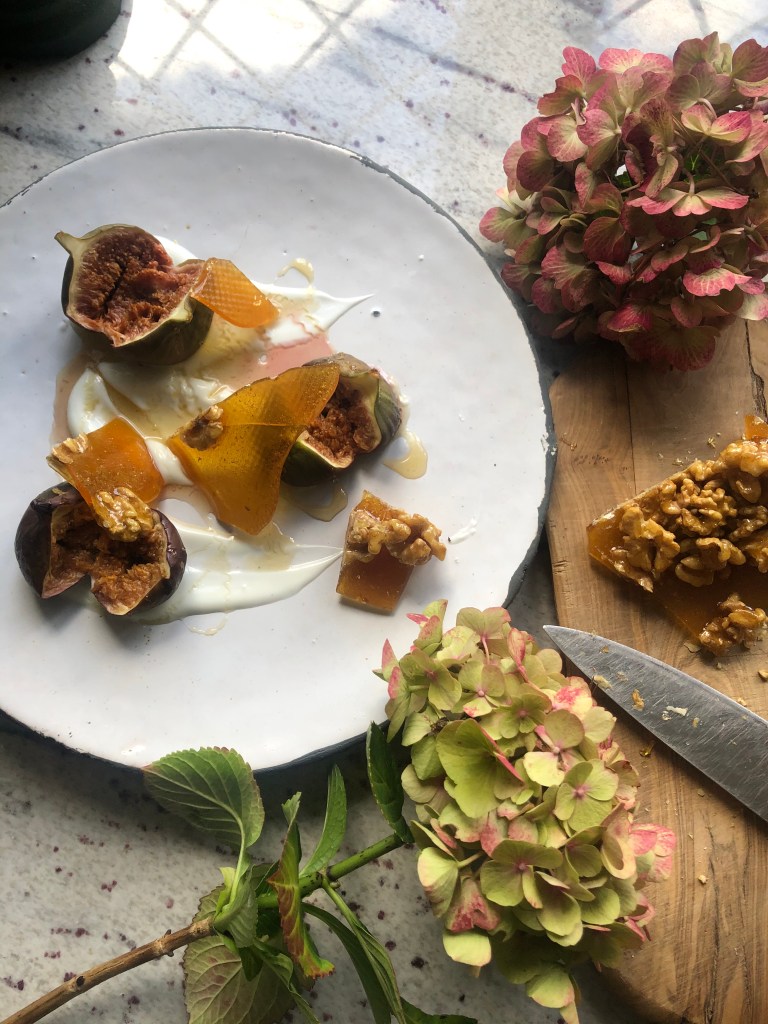
My autumn fig dish for Neptune served on their beautiful Corinium platter.
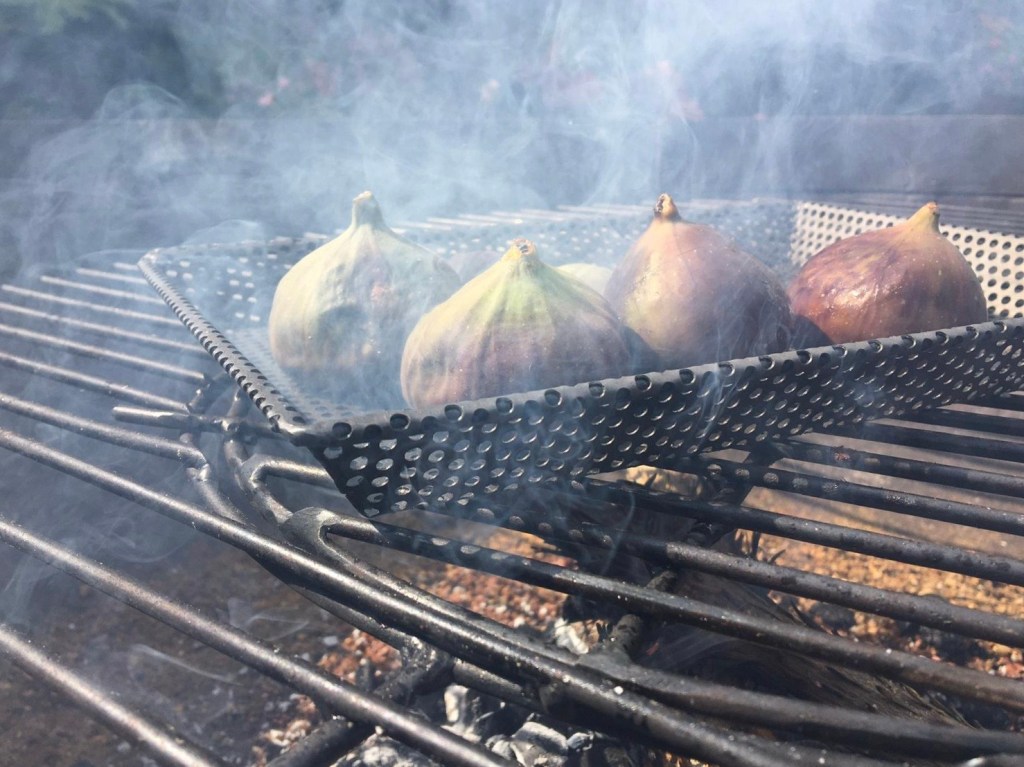
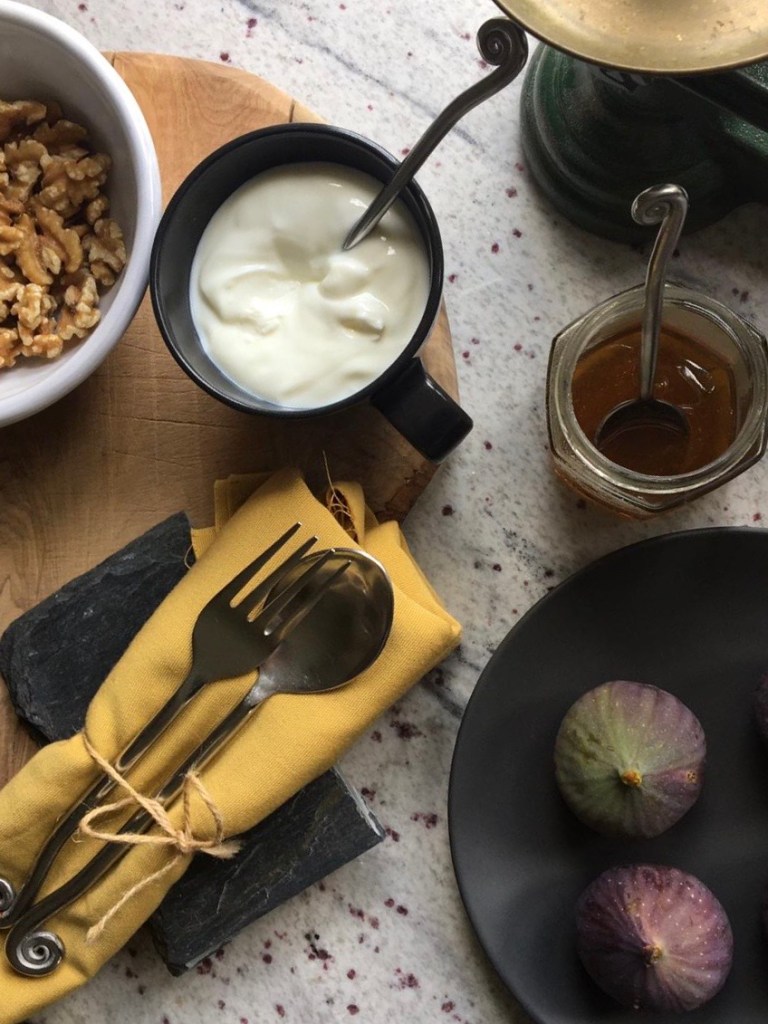
Roasted on my Kadai, served with Greek yogurt, local runny honey and finished with smashed walnut brittle

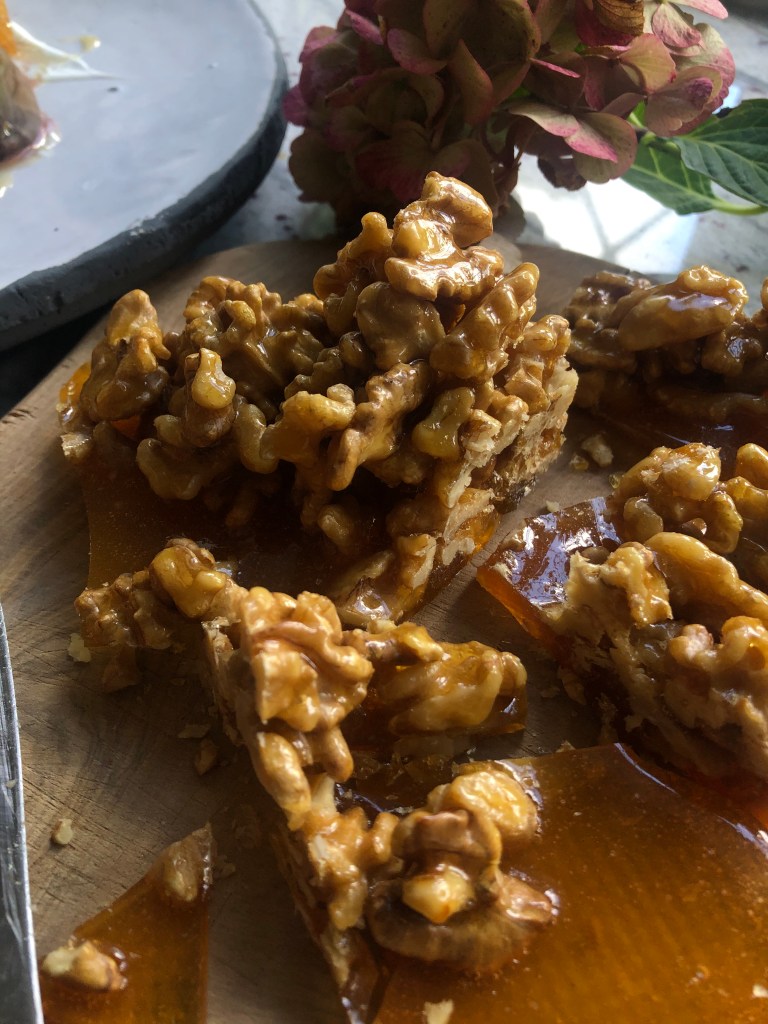
Walnut Brittle:

  1. To begin toast your 8 oz of unpeeled walnuts lightly to release their natural oils in a pre-heated oven of 180 degrees. 
  2. To begin your caramel put 8 oz of caster sugar into a medium saucepan and cover with just enough water.
  3. Place onto a high heat, you need to be careful that the sugar doesn’t burn keep an eye on your caramel until it turns a beautiful rich golden colour, the further you take the caramel the more bitter it becomes.
  4.  Add your warm walnuts to the caramel remove from the heat, and stir into your walnuts. 
  5. Line an oven tray with a piece of baking parchment, then tip onto the lined tray and allow to cool, until rock hard. 

Grilled Figs:

  1. For this dish I cooked my figs over an open fire as this imparts a wonderful smokiness to the figs. But you can use a griddle pan on the stove on a medium heat, you don’t need to add anything, just allow them to cook low and slow in their own natural juices until they are jammy and warm. 
  2. Allow to cool a little, then slice each fig in half to reveal the beautiful soft flesh. 

Serve on your favourite Neptune plate, add yoghurt in three swipes, then place a fig at the end of each swipe, drizzle your honey over the dish and lastly add your shards of walnut brittle. 

This dish is great for sharing in the garden with friends and family as we welcome fig season.